
When petrol becomes expensive, the quickest saving usually comes from using less of it rather than waiting for the next price revision. No single trick will transform a car's fuel economy, but several small changes can reduce waste and make each tank last longer.
This guide avoids a fixed petrol price so it remains useful. Always check the latest official notified rate before calculating your monthly budget.
Measure Fuel Economy Properly
Fill the tank to a repeatable level, reset the trip meter and record litres added at the next fill. Divide kilometres travelled by litres used. Repeat this over several tanks.
The dashboard average is useful for trends but may differ from pump calculations. Comparing one short trip can be misleading because traffic, warm-up and air conditioning have an outsized effect.
Accelerate Smoothly
Hard acceleration demands more fuel and often leads directly to braking. Build speed progressively, maintain space and anticipate traffic. Smooth driving is usually faster overall than repeatedly sprinting between signals.
Do not drive so slowly that you obstruct traffic or use an unsuitable high gear. The aim is steady, efficient progress.
Maintain a Sensible Speed
Aerodynamic drag rises rapidly with speed. On motorways, a moderate legal cruising speed can use noticeably less fuel than driving near the upper limit with frequent overtaking.
Use cruise control where conditions are steady, but disengage it when terrain or traffic requires better judgement.
Check Tyre Pressure
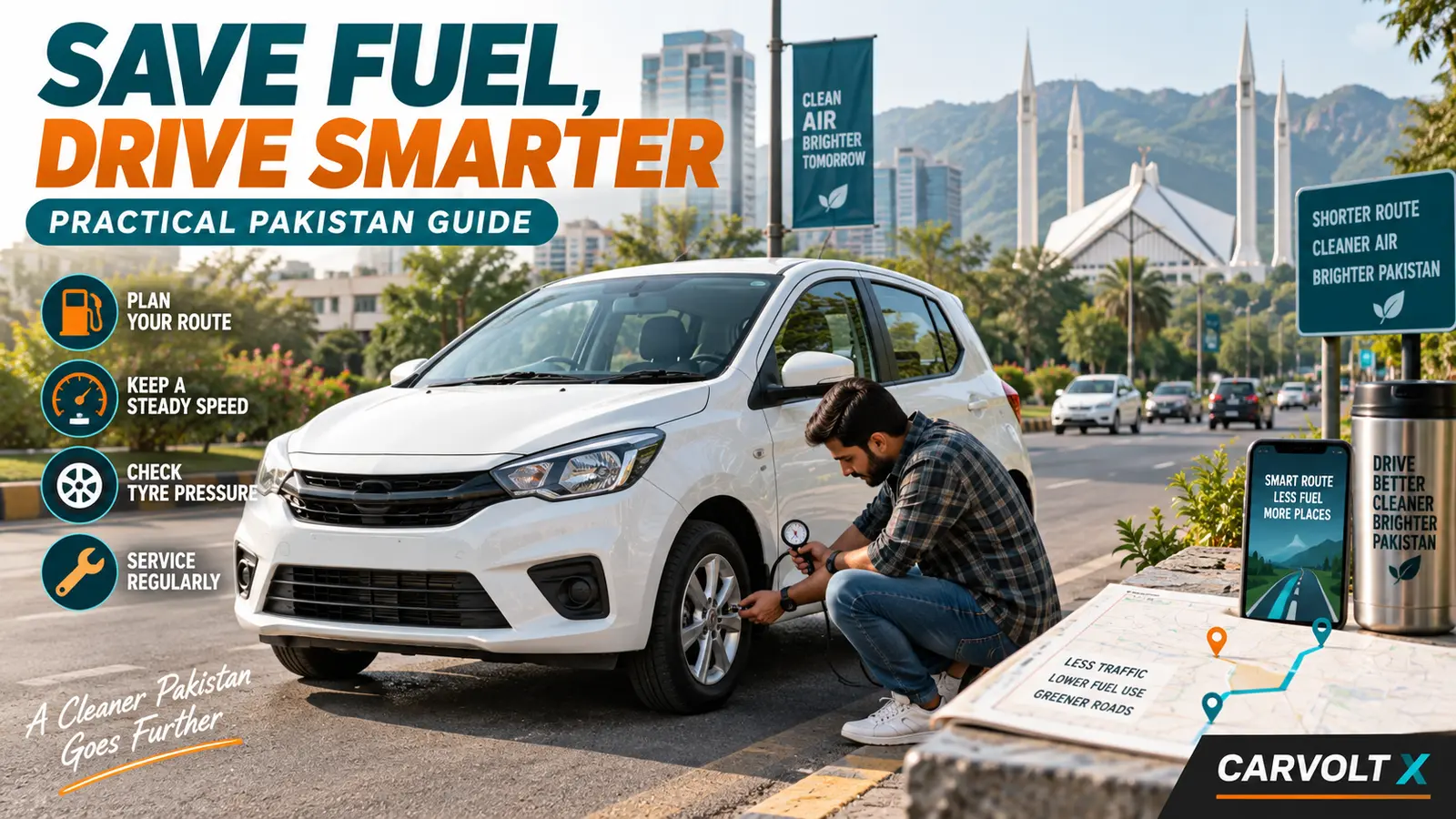
Underinflated tyres increase rolling resistance, heat and wear. Check cold pressures at least monthly and before a loaded trip. Use the vehicle placard or owner's manual, not the maximum printed on the tyre sidewall.
Overinflation is not a safe fuel-saving method. It can reduce grip, worsen ride and create uneven wear.
Remove Unnecessary Weight and Drag
Clear heavy items that stay in the boot without purpose. Remove an unused roof rack or carrier because it adds aerodynamic drag. Do not remove the spare wheel or essential safety equipment for a marginal saving.
Use Air Conditioning Intelligently
In hot weather, air conditioning is necessary for comfort and concentration. Park in shade, ventilate the hot cabin briefly and then use recirculation after the interior cools.
At higher road speeds, open windows can add drag, so air conditioning may be the more practical choice. Extreme discomfort is not an efficient or safe strategy.
Avoid Long Idling
An idling engine uses fuel while covering no distance. If a safe, legal stop will be lengthy, switching off may help, subject to vehicle guidance and weather. Do not repeatedly restart in moving queues.
Plan Routes and Trips
Combine errands, travel outside peak congestion where possible and use live navigation to avoid closures. A slightly longer moving route can sometimes use less fuel than a short route with prolonged crawling, but distance still matters.
Keep the Car Maintained
Use the correct engine oil, replace restricted filters at the recommended interval and address misfires, warning lights or dragging brakes. Wheel misalignment and worn bearings can also increase resistance.
Use the CarvoltX AI Maintenance Advisor for symptom-based guidance
Buy Fuel Sensibly
Use reputable stations, stop when the nozzle clicks and keep receipts when monitoring consumption. Premium fuel does not automatically improve economy unless the manufacturer requires or benefits from the higher octane.
Compare Alternatives With Real Numbers
If considering an EV, use the CarvoltX EV Savings Calculator
Use the CarvoltX AI Car Advisor to find vehicles suited to your route and budget
Buyer-facing summary
The most reliable savings come from measurement, smooth driving, correct tyres, route planning and maintenance. Avoid unsafe coasting, excessive tyre pressure or switching off the engine while moving.
Improve one habit at a time and compare several full tanks. That shows which changes genuinely work for your car and routine.
Measure Before You Modify
Track litres filled and kilometres travelled across at least three comparable tanks. This exposes whether a change in route, tyre pressure or driving style actually helped. Dashboard estimates are convenient, but pump-to-pump records provide a more consistent personal baseline. Sudden deterioration deserves a proper diagnostic check rather than an unproven fuel-saving gadget.