
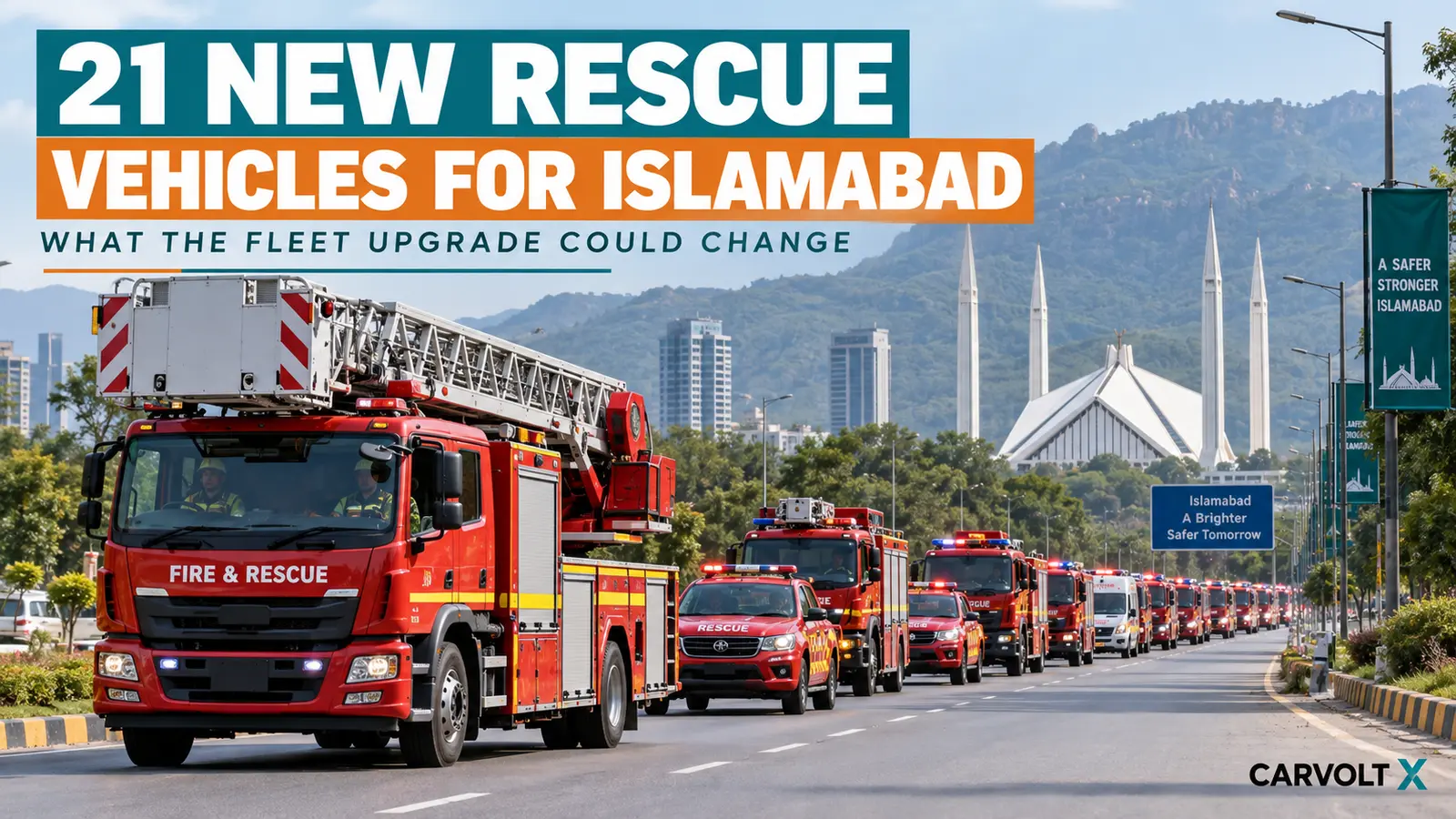
Islamabad’s emergency fleet is set for a significant upgrade through 21 modern fire and rescue vehicles being provided by China. Reports in August 2026 valued the package at 72.31 million yuan, or roughly Rs 3 billion at the cited conversion, and connected it to an agreement reached in 2024.
The number is important, but new vehicles alone do not guarantee faster or safer emergency response. Their locations, crew readiness, water supply, maintenance and dispatch coordination will determine what residents actually gain.
What is expected in the package?
Earlier public reporting on the agreement described 19 firefighting vehicles, one multifunction rescue vehicle and one multifunction rescue excavator. The fire fleet was reported to include aerial-platform units, water-tank trucks, water-tower trucks and equipment carriers.
An aerial appliance is particularly relevant in a city with growing high-rise development. Aerial reach can help firefighters operate at height, but access roads, stabiliser space, overhead obstructions and trained operators remain necessary. Water carriers can support areas where hydrant access is limited, while equipment vehicles help bring specialised rescue tools to an incident.
The exact final configuration and technical specifications should be confirmed by the Capital Development Authority when the vehicles arrive and are commissioned.
Why Islamabad needs more than replacement trucks
Some vehicles in the existing fleet have reportedly been in service for close to two decades. Age can affect reliability and parts support, especially for emergency machines that must work immediately after long standby periods. Replacing old equipment can reduce breakdown risk and add capabilities that older trucks lack.
Coverage is equally important. Plans reported in 2026 include new rescue and fire stations in G-11, I-14, I-9 and Model Town Humak. Properly placing vehicles at several stations can cut travel time compared with concentrating them in one location. It can also improve coverage for expanding residential and industrial areas.
Response time is not just a driving problem. Call handling, accurate location data, station turnout, traffic clearance and building access all consume minutes. The most useful public reporting after deployment would therefore include average dispatch and arrival times, not simply a fleet count.
Training and maintenance will decide the outcome
Specialised equipment requires specialised training. Crews need repeated practice in aerial operation, pump management, breathing apparatus, road-crash extraction and hazardous environments. Joint exercises with hospitals, police, building managers and utility teams can expose coordination gaps before a real incident.
Maintenance planning should begin before the first deployment. CDA will need spare parts, diagnostic tools, tyres, hydraulic expertise and preventive inspection schedules. A vehicle that looks modern at handover can become unavailable quickly if consumables or technical support are missing.
Public accountability would also help. The authority could publish which stations receive each vehicle, commissioning dates, crew certification status and fleet availability. That would let residents judge whether the investment is improving readiness.
What motorists should do around emergency vehicles
Drivers have a direct role in response times. When lights and sirens approach, check mirrors, indicate and move predictably to create a safe path. Do not race an emergency vehicle, follow it through traffic or stop in a junction. At a crash scene, keep access lanes clear and follow police instructions.
Vehicle owners should also recognise warnings in their own cars before they become roadside hazards. The CarvoltX warning-lights guide can help identify common dashboard symbols, but a serious red warning should prompt a safe stop and professional assessment.
What happens next?
Reports expected the vehicles to arrive in Pakistan in September 2026. Arrival is only the first milestone. Customs clearance, inspection, registration, equipment checks, crew training and station allocation must follow before the fleet becomes operational.
For Islamabad residents, the useful questions are straightforward: where will the vehicles be based, when will they enter service, how many trained crews are available and how will response performance be measured? Clear answers would turn a high-profile handover into a credible public-safety programme.
Building owners also have responsibilities. Clear evacuation plans, accessible fire exits, maintained alarms and unobstructed approach routes allow rescue teams to use new equipment effectively. Residents should report blocked access and unsafe parking through the relevant civic channels instead of waiting for an emergency to reveal the problem.


