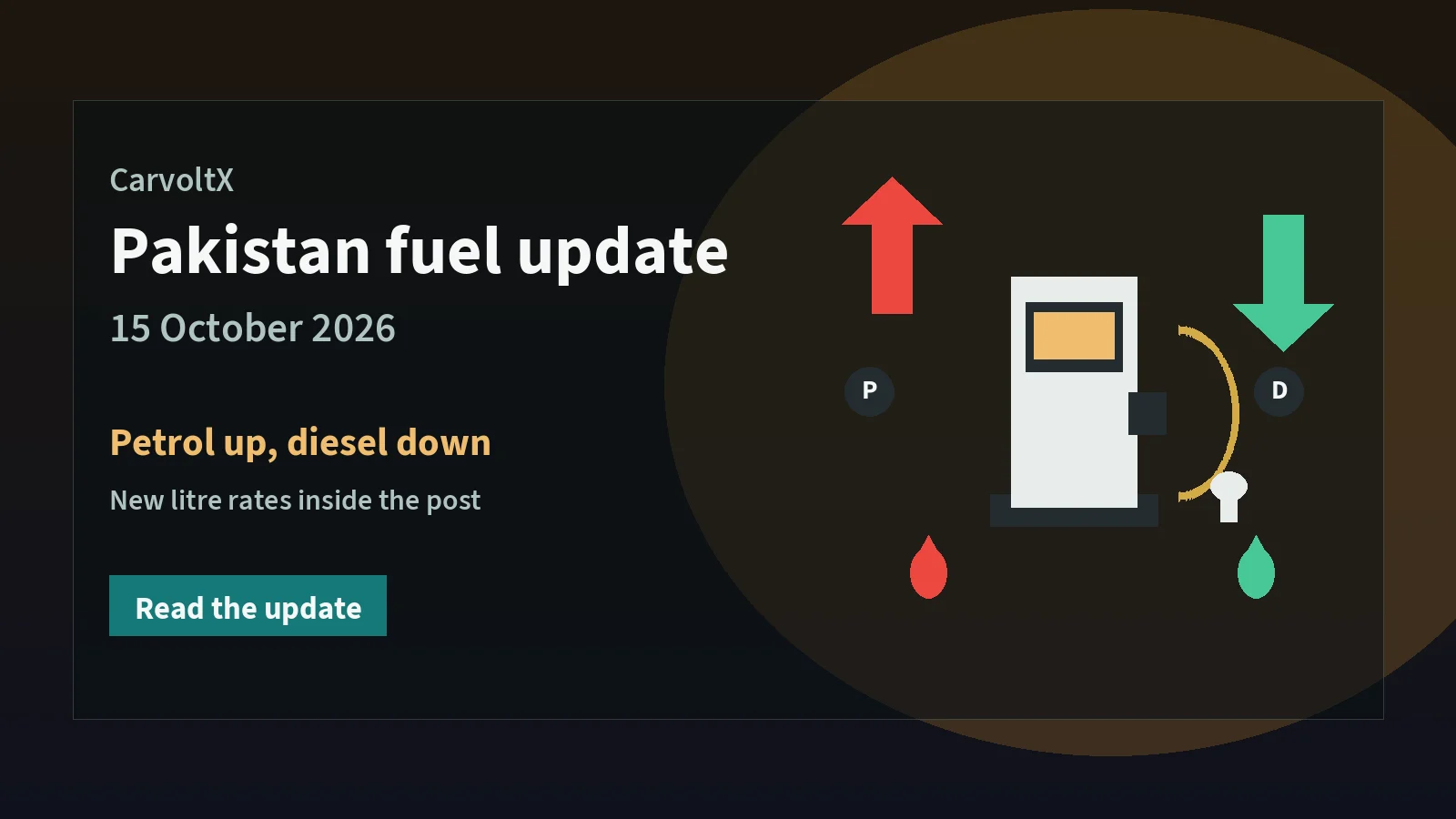


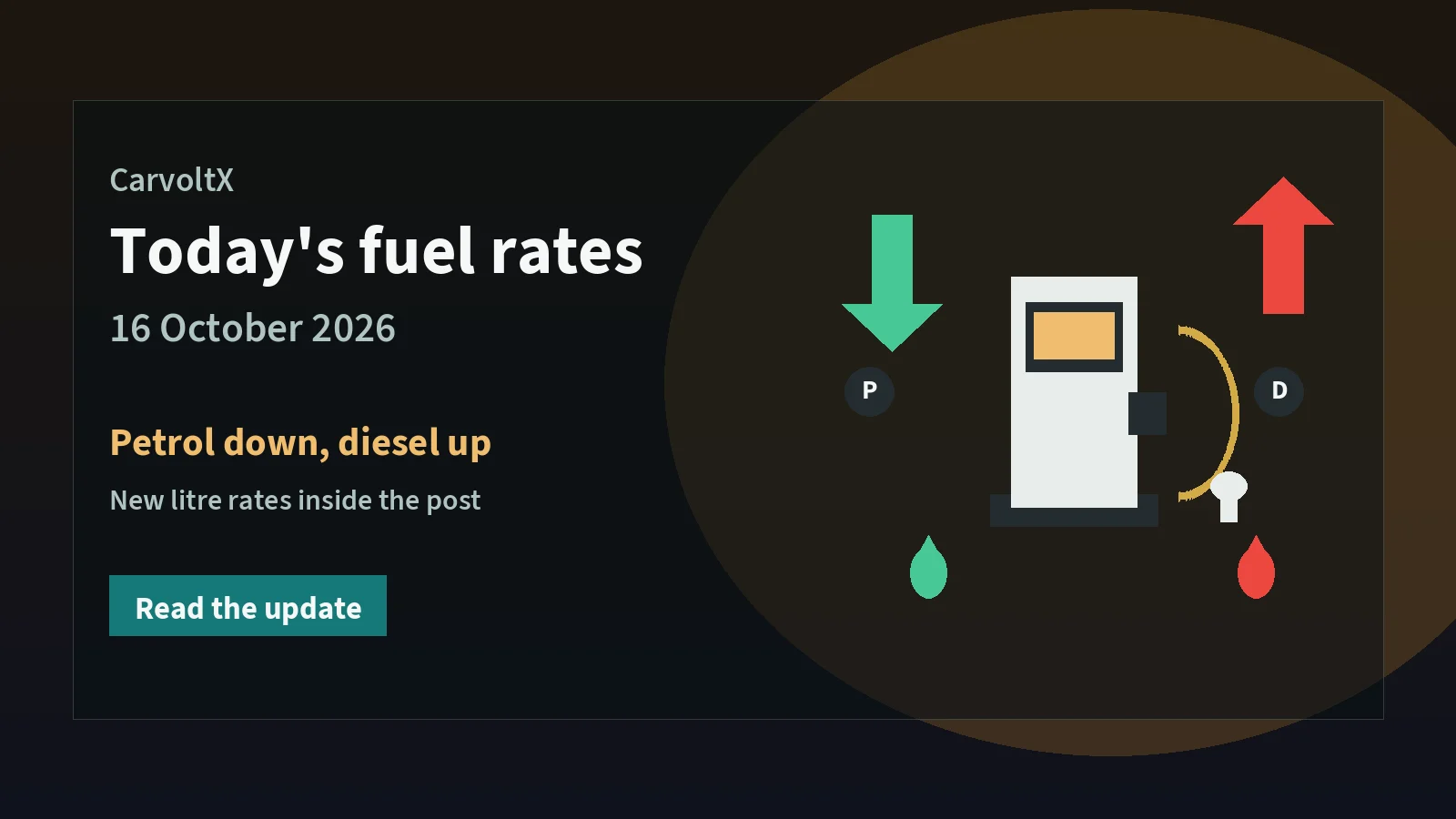
Pakistan's nationwide petrol and diesel ceilings were revised lower for 16 October 2026. The daily pricing window usually lands near midnight, so morning pump boards should already show the softer rates.
Petrol moved from Rs 393.86 to Rs 390.23 per litre, a cut of Rs 3.63.
Diesel moved from Rs 396.65 to Rs 396.96 per litre, up Rs 0.31. Freight and farm machinery feel that shift quickly.
Premium hi-octane is not a single nationwide ceiling. Station quotes around Rs 400 are only a guide and can differ by city.
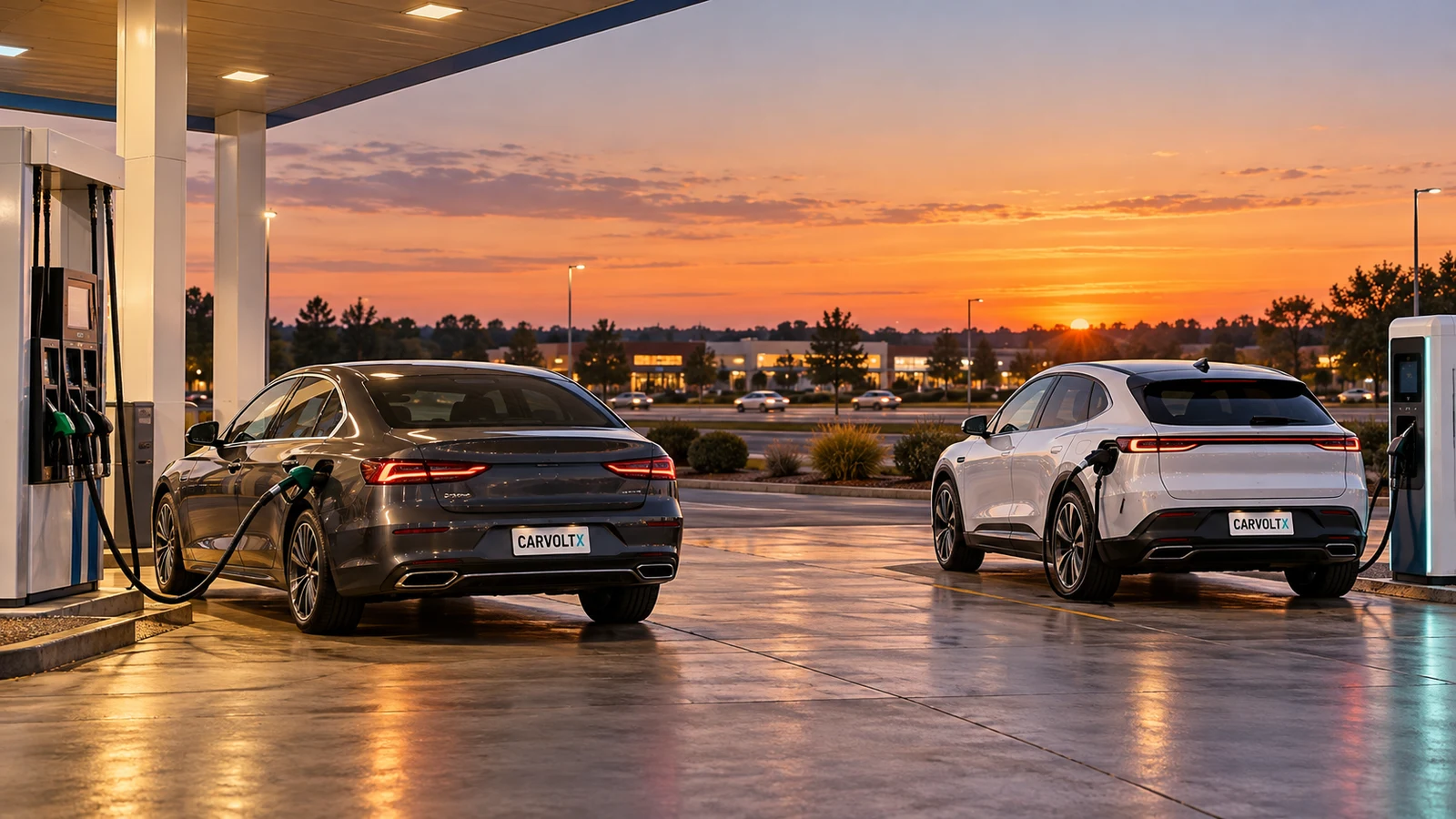
Hybrid and EV shoppers can reuse the same litre figures when they estimate fuel avoided. Refresh those assumptions after each clear revision instead of relying on last week's memory.
When petrol and diesel diverge, the cheaper powertrain for your kilometres can flip. Re-check the gap rather than assuming last month's ranking still holds.
The daily cycle means tomorrow can reverse today's direction. Use each notification as a checkpoint, not a forecast for the rest of the week.
Ride-hail and school-run budgets feel fuel moves quickly. One fill looks small; a full month of short trips is where the revision shows up in cash.
Before you fill up, decide whether you are topping a quarter tank or taking a full load. On a rising day, a smaller top-up limits how much of the new rate you lock in; on a falling day, a fuller tank captures more of the relief.
Local pump prices can still differ by city and station even when the headline rate is clear. Use the published litre rate as your reference, then trust the board in front of you for the final fill amount.
Compare the move on the Pakistan fuel prices chart whenever you want the litre figures without hunting through notifications.
Whether rates rise or fall tomorrow, the habit stays the same: check the ceiling, then decide when to refill. Short memory is expensive when prices move daily.