

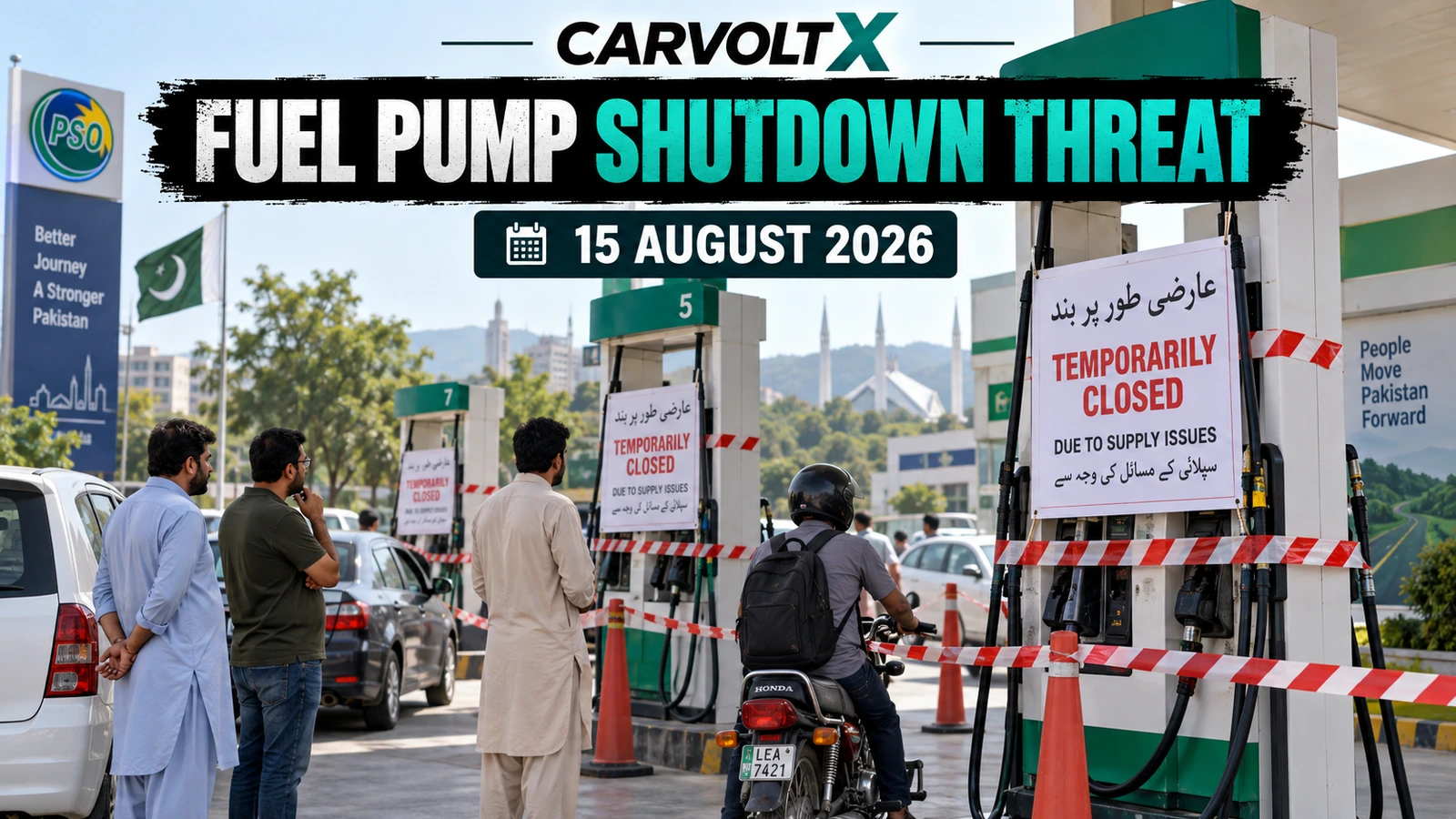
Petroleum dealers announced that fuel pumps could shut nationwide from 15 August 2026 during a dispute over dealer compensation. The announcement raised understandable concern for motorists and businesses, but strike threats can be withdrawn or modified after government talks.
This article records the position announced on 11 August. It is not current fuel-availability advice for a later date. Readers should check the Petroleum Division, OGRA and the recognized dealer association for the final outcome, affected locations and any exemptions.
Motorists should avoid panic buying. Long queues can obstruct roads, increase fire risk and create a shortage faster than ordinary demand. Keep a sensible routine fuel level and postpone non-essential journeys only when official supply information supports that choice. Never store petrol in unsafe containers or inside living spaces.
Dealer margin is one element of the regulated price structure, separate from the underlying product cost, levy and other notified components. Any agreement should be read for its effective date and whether it changes pump prices or only reallocates an existing component.

How to assess this update
Start with the date and the source responsible for the claim. A forecast, announcement, price circular, recall notice and completed action carry different levels of certainty. Check the latest primary document before paying, travelling or changing how a vehicle is maintained. If a detail has not been confirmed for the relevant market, it should remain TBA.
Market scope is especially important for vehicles. Power, equipment, warranty and even model names can vary between countries. A global reveal does not confirm a Pakistan launch, and an overseas recall does not automatically include locally supplied vehicles. Likewise, a reported future model should not be illustrated or described as though its final production design is known.
What owners and buyers can do
Translate the headline into a practical checklist. Buyers should compare the exact variant, final on-road price, financing, energy use, maintenance, insurance, warranty and resale expectations. Existing owners should keep service records, monitor official campaigns and use the correct fluids, parts and charging practices. Travellers should confirm current restrictions and route information shortly before departure.
The CarvoltX tools can organize comparisons and estimates. They cannot replace a written quote, an authorized workshop inspection, an official traffic order or a government notification. Preserve important documents and obtain a proper receipt whenever money changes hands.
What to watch next
Look for the next dated milestone. That may be a manufacturer specification, distributor price list, PAMA data table, recall VIN checker, formal agreement, implementation notice or withdrawal of a temporary restriction. Repetition across several news pages is not independent confirmation when all of them trace back to the same unverified statement.
Figures also need a defined comparison. A monthly sales decline may be month-on-month rather than year-on-year. A power claim may use PS rather than mechanical horsepower. A price increase may differ by variant. A shutdown announcement may later be withdrawn after negotiations. The correct baseline and effective date should always be stated.
Why careful verification matters
Automotive decisions are expensive and often time-sensitive. An incorrect price can distort an EMI calculation, an outdated restriction can disrupt a trip, and the wrong recall scope can either cause unnecessary concern or leave a real safety issue unattended. Clear uncertainty is more useful than false precision.
Readers should revisit the official record immediately before acting. Save dated confirmations for bookings, payments, recalls and regulatory matters. If the primary record is unavailable, pause the decision or label the unresolved point clearly instead of guessing. This approach keeps the article useful even as the story develops.
Bottom line
The headline provides a useful starting point, but the responsible next step depends on the subject. Compare exact local vehicles, follow official safety instructions, and separate confirmed outcomes from proposals or rumours. That discipline protects both the reader's budget and expectations.
When specifications or prices are central, record the trim name and document date beside every number. When safety is central, follow the instruction issued for the affected vehicle, place and period. If two official sources appear inconsistent, seek clarification instead of selecting the more attractive figure. A short delay for verification is usually less costly than a booking, journey or repair based on the wrong assumption.
Finally, keep future updates connected to the original record. Readers should be able to see what changed, when it changed and which authority confirmed it. That context turns a fast news item into a dependable reference.