
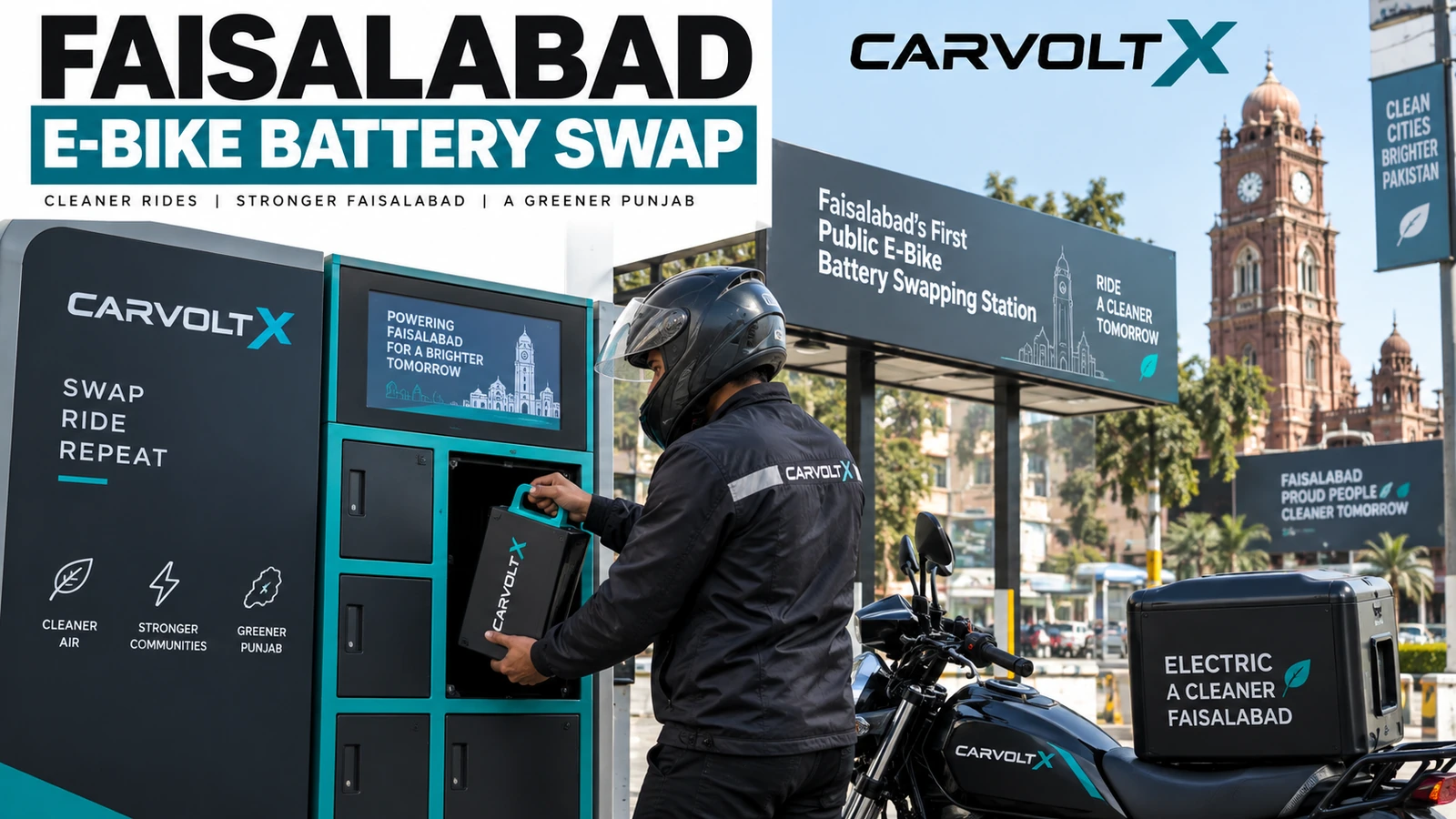
Faisalabad's first public e-bike battery swapping station marks a practical step in Punjab's electric-mobility rollout. Instead of waiting for a depleted pack to recharge, a rider using a compatible system can exchange it for a charged battery and continue the journey. The idea is especially relevant to delivery riders and frequent commuters whose income or schedule depends on keeping a motorcycle available.
The word compatible is essential. A swap cabinet is not a universal charger, and riders should not assume that every electric motorcycle or removable battery can use it. Pack shape, voltage, connector, battery-management software, ownership terms and operator registration all have to match. Users should confirm supported models, charges, hours, identification requirements and fault-reporting procedures directly with the station operator.
Safety and uptime will determine whether the project becomes more than a demonstration. Cabinets need protected electrical installation, temperature monitoring, fire procedures and reliable inventory. Operators also need a clear process for damaged packs and for customers who receive a battery that does not perform as expected. The consolidated research described the same Punjab inauguration from two angles; this draft treats it as one event rather than two separate launches.

How to read this update
The source date is central to this story. An announcement records what an organization said at that point, but it does not guarantee that a temporary offer, traffic plan, price or operating arrangement remains active later. Before acting, readers should check the newest dated notice from the responsible authority or company. Screenshots and reposts can omit eligibility, geographic scope or an expiry date.
Market scope also matters. A vehicle revealed in Australia or a corporate result reported globally does not automatically describe Pakistan specifications, prices or availability. Similarly, a city-level transport initiative should not be presented as a nationwide programme. Where a local launch, price or implementation step has not been confirmed, it should remain TBA.
What readers should verify
Start with the primary record and note its publication date. For a vehicle, confirm the exact model year, variant, battery or engine, safety equipment, warranty and delivery market. For a public policy or road plan, confirm the issuing department, effective period, locations and exemptions. For a price, ask whether the figure is ex-factory, retail, promotional or an adjustment to an earlier notified amount.
Numbers require a clear baseline. A global sales milestone may combine many years and markets. A quarterly profit decline needs the correct comparison period and accounting currency. A saving of "up to" a stated amount does not mean every buyer or model receives the maximum. Fuel-price changes should be tied to the government notification and effective fortnight, not treated as today's pump price indefinitely.
Practical next steps
Buyers should obtain a written quotation before paying. It should identify the exact variant, price components, taxes, registration, delivery estimate, refund terms and validity period. The CarvoltX comparison, on-road cost and EMI tools can help organize a decision, but they cannot replace the seller's signed paperwork or an official notification.
Commuters should recheck route advice shortly before departure because closures can move as processions and security plans develop. Allow extra time, keep emergency access clear and follow traffic police directions at the scene. Do not rely on a historical diversion map for a later event.
Owners using new mobility services should ask about compatibility and safety. Battery swapping is only useful when the pack, connector, software and operator are designed to work together. Card payment at a fuel station requires a secure terminal, an itemized receipt and immediate review of any duplicate or failed transaction.
What to watch next
The next meaningful update will usually be a dated primary document: a formal rollout notice, an official model specification, audited financial result, revised traffic advisory, company price list or government fuel-price notification. That is stronger evidence than repetition across several news pages that may all trace back to the same unverified claim.
Readers should save documents connected with money, safety or legal compliance. Keep booking forms, receipts, transaction references and official messages. If two sources conflict, pause and seek clarification rather than selecting the more convenient version. A short verification delay is less costly than a wrong booking, an avoidable detour or a disputed payment.
Bottom line
This update is useful when its date, market and level of confirmation stay attached to it. Separate a proposal from implementation, a temporary campaign from a permanent price, and a foreign-market debut from local availability. That discipline makes fast automotive news genuinely helpful rather than merely attention-grabbing.