

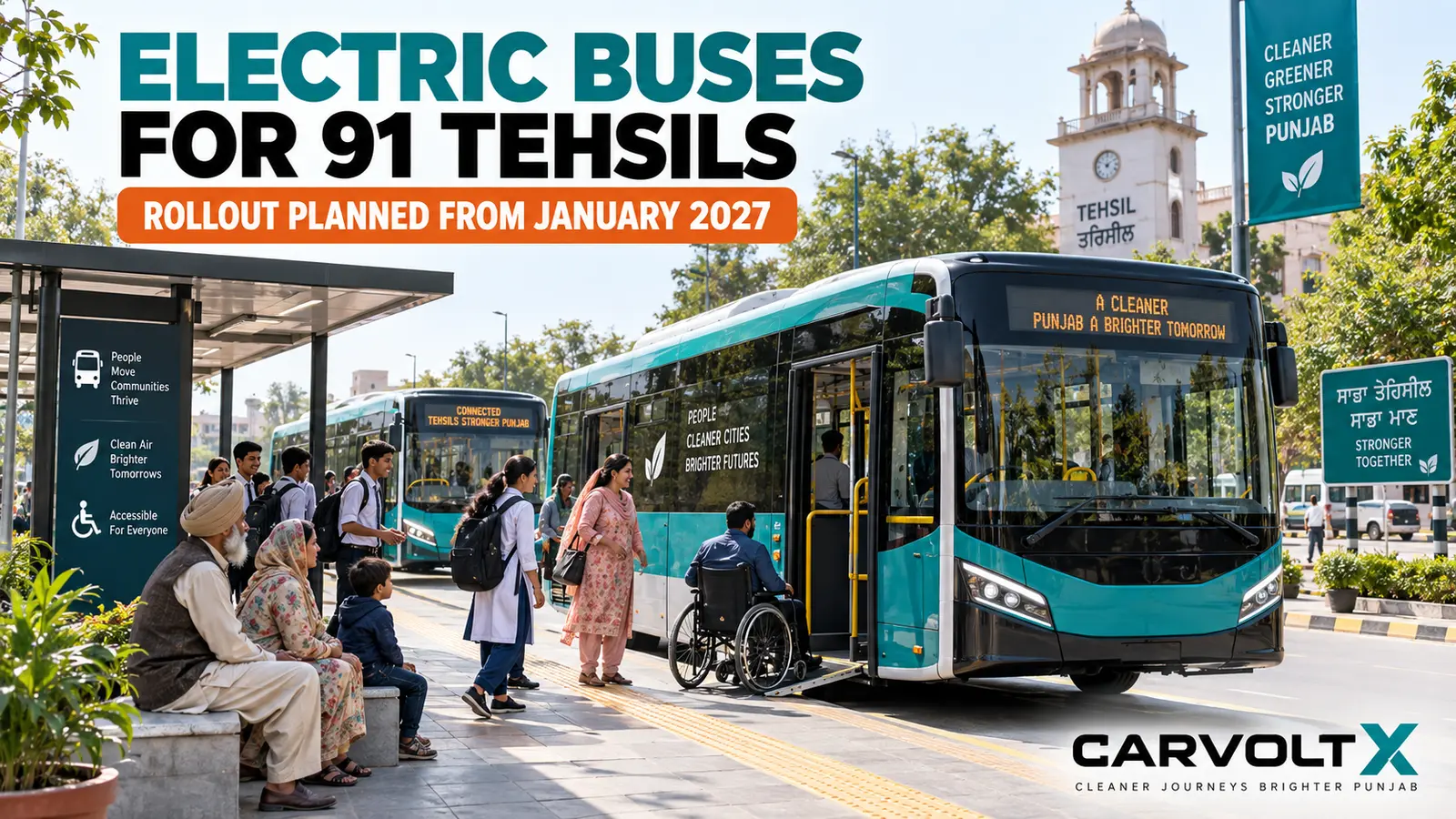
Punjab has approved an expansion of electric-bus service to the tehsil level, with operations scheduled to begin in January 2027. The official Punjab portal says 1,500 electric buses are planned across 91 tehsils. A related announcement describes a wider ambition of 5,000 buses over five years.
This consolidated post replaces the overlapping ideas numbered 081 and 085. The 1,500-bus rollout and 5,000-bus long-term target should remain separately labelled until procurement and delivery schedules confirm how they connect.
Why Tehsil-Level Service Matters
Public-transport investment often concentrates in major city centres. Extending service to tehsils could connect students, workers, hospitals and markets in areas where households depend on motorcycles, vans or costly private travel.
The benefit depends on useful routes and frequency. A new bus has limited impact if stops are distant, schedules are unreliable or the last service leaves too early.
January 2027 Is a Planned Start
The date is a target, not proof that every tehsil will begin operations simultaneously. Procurement, charging depots, driver training, route approvals and electricity connections must be completed.
Authorities should publish which locations launch first and whether the 1,500 buses arrive in phases. CarvoltX should update the headline only when services actually begin.
Understanding the Two Bus Numbers
The Punjab portal reports 1,500 buses across 91 tehsils. Separate research mentions 5,000 buses over five years. The safest interpretation is an initial deployment within a broader expansion plan, but this relationship should be confirmed from the Transport Department.
Neither number should be described as already operating. Delivery, registration and route deployment data will provide stronger evidence.
Charging Infrastructure
Electric buses require depots with reliable grid supply, chargers, parking and maintenance space. Route schedules must leave enough time for charging without reducing service frequency. Backup plans are needed for outages or charger failure.
Battery size, charger power and daily distance should be matched route by route. Hot weather, air conditioning, passenger load and traffic affect energy use.
Passenger Experience
Low-floor access, safe stops, lighting, ventilation, route information and reliable ticketing are as important as the powertrain. Women, older passengers and people with disabilities should be included in route and station design.
Fare policy should be published before launch. Electric operation can reduce energy and maintenance costs, but vehicle financing, staff, depots and replacement batteries remain significant.
Local Air and Noise Benefits
Electric buses produce no tailpipe exhaust and can reduce street-level engine noise. Overall environmental benefit still depends on electricity generation, vehicle utilisation and battery lifecycle. Replacing high-mileage diesel service usually creates more value than operating empty showcase routes.
Jobs and Maintenance
The programme will require drivers, technicians, dispatchers and charging staff. Training should cover high-voltage safety, battery diagnostics and emergency response. Parts contracts and warranty arrangements must prevent buses from remaining parked after minor failures.
Measuring Success
Punjab should publish buses delivered, routes active, passenger journeys, reliability, energy use and service interruptions. Tehsil-level coverage should mean real scheduled service, not merely allocation on paper.
How to read this update
The expansion could be one of Punjab's most important mobility projects if it prioritises dependable routes over headline fleet size. The 91-tehsil reach is ambitious, and January 2027 will be an early test of delivery.
The key questions are where buses launch, how often they run, what fares apply and whether charging and maintenance keep them on the road.
Route Selection
Tehsil routes should be chosen using population, current travel demand, hospitals, colleges, markets and connections with existing services. Political visibility should not replace transport evidence. Public consultation can identify travel needs that old traffic counts miss.
Stops require safe pedestrian access and shade. A bus cannot serve passengers effectively if they must cross a high-speed road without protection.
Procurement and Accountability
Tender documents should disclose vehicle standards, battery warranty, local support, charging equipment and lifecycle cost. Delivery acceptance must include inspection and performance testing rather than counting parked vehicles.
Authorities should report how many buses are operational, awaiting parts or assigned to each route. This prevents a procurement target from being mistaken for daily service capacity.
Integration
Fares and schedules should connect with other buses where possible. Simple route maps, stop names and digital updates will make unfamiliar services easier to use. Cash and electronic payment options should remain accessible during rollout.