

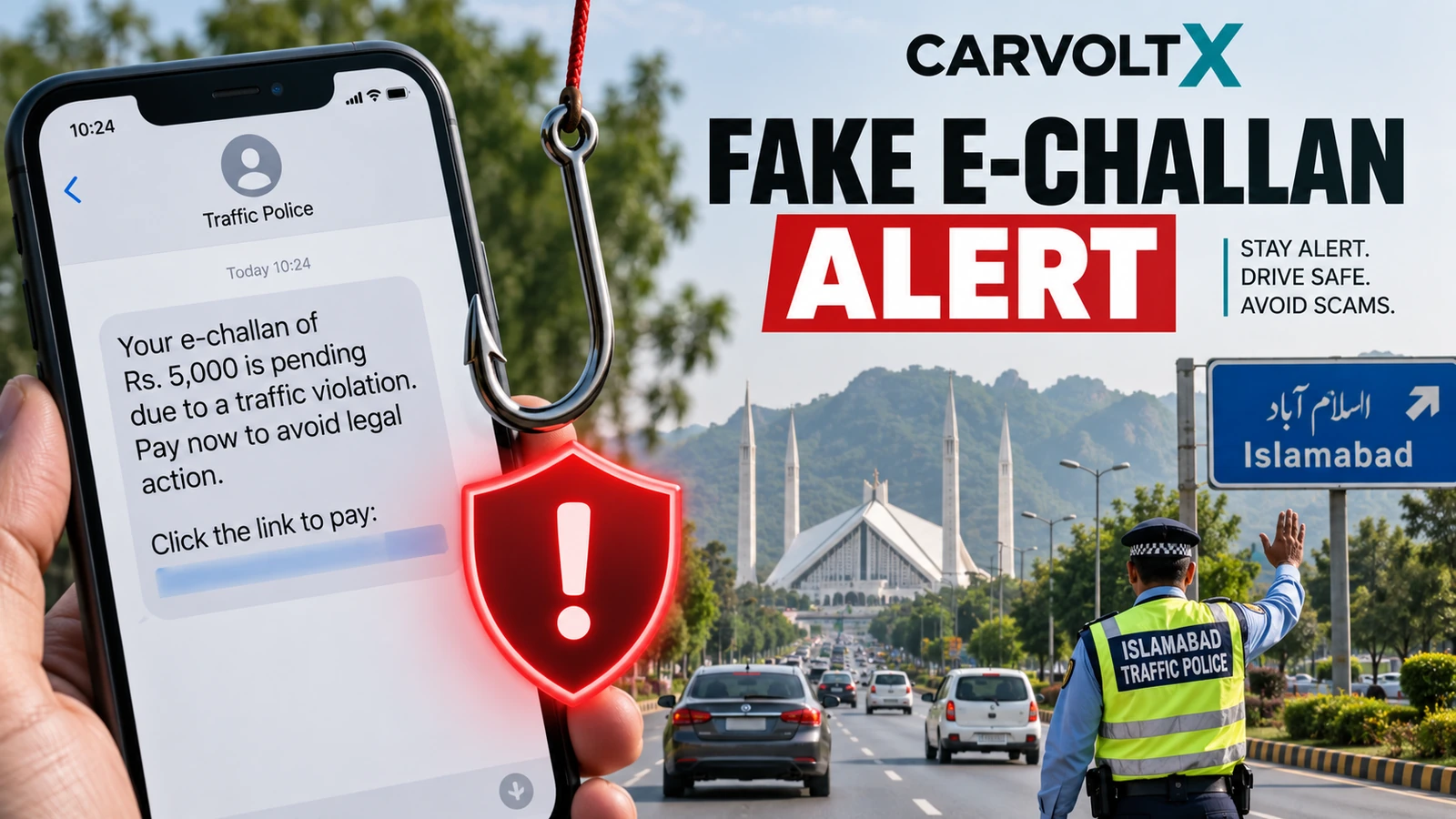
Islamabad Traffic Police warned residents about fake e-challan messages that imitate a traffic notice and pressure the recipient to open a link or make an urgent payment. The scam succeeds when official-looking language, a deadline and fear of a penalty override normal caution.
Do not tap a payment link in an unsolicited message. Open the official traffic-police website or app independently, or contact the published helpline using details found through an official government source. A genuine record should be verifiable using the lawful process without sending money to a personal wallet, unknown account or shortened web address.
Warning signs include spelling errors, an unfamiliar domain, requests for passwords or one-time codes, and threats of immediate arrest or vehicle blocking. Even a polished message can be fraudulent, so appearance alone is not proof. Never share an OTP, card PIN or banking password with someone claiming to resolve a challan.
If you already interacted with a suspicious page, contact the bank promptly, change exposed credentials and report the message to the relevant cybercrime and police channels. Preserve screenshots, the sender number, transaction details and URL as evidence, but do not forward the live link to friends.

How to read the announcement
The date and status attached to this story matter. Approval, planning, booking, launch and completion are different stages. An authority may approve a budget before contracts are awarded, while a manufacturer may preview a product before prices and deliveries are confirmed. Readers should check the latest primary-source notice before changing a route, paying a deposit or making a financial decision.
Time-sensitive figures also need context. A project estimate can change during procurement. A vehicle specification can vary by market or trim. A fine or administrative rule can differ between provinces and cities. Where a current official document is unavailable, the responsible detail should remain TBA rather than being filled with an assumption.
What this means for ordinary road users
The practical value of automotive news lies in its effect on safety, time and ownership cost. Drivers can respond by planning alternative routes, keeping documents current, using verified payment channels and comparing the complete cost of a vehicle rather than its headline feature. Public announcements should be judged by measurable implementation, not only their initial wording.
For car buyers, local warranty, parts support, charging or fuel needs, insurance and registration can materially change the ownership experience. For infrastructure stories, construction management, maintenance responsibility and transparent completion reporting matter as much as the initial budget. For enforcement news, clear public communication and a lawful verification process help compliant road users avoid both penalties and scams.
What to verify next
Start with the organization named in the announcement. Look for a dated release, notification, tender, product page or public advisory. Confirm the correct city or market, effective date and scope. If money is involved, obtain written terms and a proper receipt. If a link arrives by SMS, do not trust it merely because it uses official-looking language.
Save the source and compare it with later updates. Plans, negotiations and launch schedules can change. A later correction does not make careful reporting weaker; it makes the record more useful. Readers should also distinguish an international model specification from the equipment actually offered in Pakistan.
CarvoltX tools can help organize a buying or ownership comparison, but they do not replace confirmation from the relevant authority, bank, insurer, charging operator or authorized distributor. The most reliable decision combines current documents with the reader's own route, budget and usage pattern.
Bottom line
This development deserves attention, but the headline is only a starting point. The best next step is to confirm its present status and then act on information that applies to the correct place, date and version. That simple discipline reduces costly misunderstandings and keeps expectations realistic.
Where several sources repeat the same claim, repetition alone is not verification. Trace the detail back to the authority responsible for the project, rule or product. Keep a dated copy of any important confirmation, especially when a payment, booking, deadline or travel decision depends on it.
If the primary record is unavailable, pause the decision and label the unresolved detail clearly instead of guessing.
Readers should repeat these checks immediately before acting, because later official notices may supersede the dated information summarized here.


