
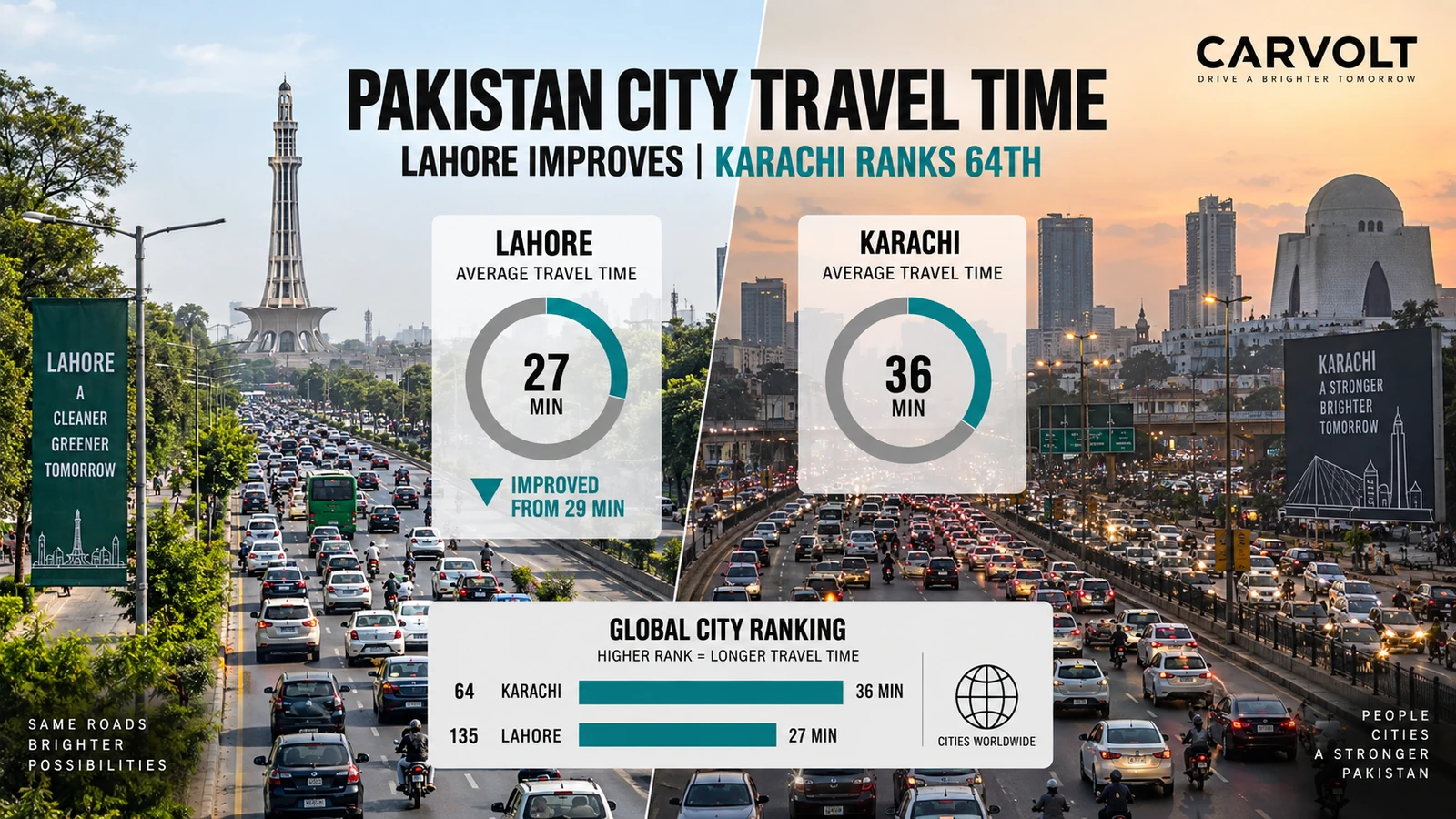
Lahore performed better than 149 cities on travel time in a 2026 mid-year comparison, while Karachi was reported at 64th in the referenced ranking. The result sounds encouraging for Lahore, but rankings need methodology and direction explained. A city can improve relative to others even when residents still experience difficult peak-hour journeys.
The current Numbeo index, sample size and metric definitions should be checked before publication. Crowdsourced indices may reflect contributor responses rather than a complete sensor-based record of every trip.

What travel-time rankings can reveal
Consistent city comparisons can show broad differences in commute burden and help start a policy discussion. They can reflect road congestion, trip length, mode choice and public-transport availability. They do not automatically identify which project caused a change.
Why local experience varies
A commuter on Canal Road, a student using Metrobus and a delivery rider in the old city can experience completely different conditions. School hours, rain, construction and events can shift travel time sharply. Policymakers should combine global rankings with local traffic counts, public-transport data and neighbourhood surveys.
The real target is not a better ranking alone. It is reliable door-to-door travel, safer streets and more alternatives to single-occupant car trips.
What this means in practice
The most useful comparison is not always between the newest products. It is between the new option and the vehicles or services people can actually obtain with reliable support. Availability of parts, trained technicians, warranty coverage and insurance can outweigh an impressive feature list.
Pakistan also has varied road, weather and charging conditions. A product that performs well in a foreign test may deliver a different result in heat, congestion or on damaged surfaces. Global specifications must keep their original market and test cycle attached. Local confirmation is necessary before quoting them as Pakistan figures.
Buyers should test the exact variant, not a visually similar display model. Public-service users should verify which routes, vehicles or jurisdictions are covered. Investors and industry readers should compare several months rather than treating one strong or weak month as a permanent trend.
The best conclusion is therefore conditional: the development is important, but its value depends on execution. Transparent pricing, clear documentation and dependable support turn an announcement into a genuine improvement. Until those pieces are visible, enthusiasm should remain balanced with verification.
How readers should use this update
Start with the source date. Automotive prices, launch plans, public projects and enforcement policies can change quickly. A statement that was accurate in August 2026 should not automatically be treated as the position today. Before paying, travelling or changing a purchase decision, open the latest announcement from the manufacturer, regulator or responsible authority.
Next, separate the headline from the decision it supports. A price revision changes the budget but does not decide whether a vehicle fits a family. A teaser does not guarantee a launch. A ranking provides a comparison method, not a permanent verdict. A new rule needs an effective date and enforcement scope. This distinction keeps useful news from becoming misleading advice.
For any financial decision, calculate the complete cost. Include registration, taxes, insurance, financing, maintenance, tyres, energy and resale uncertainty. For an EV or hybrid, verify charging access, battery warranty and service capability. For a conventional vehicle, use realistic fuel consumption rather than a laboratory best case. CarvoltX tools can help organise the calculation, but the inputs must come from current official documents.
Safety deserves a cautious approach. Follow posted road restrictions, preserve emergency access and never assume an assistance system replaces attention. When a government service or payment is involved, use an official domain and keep receipts. Do not share an OTP or banking PIN with anyone claiming they can accelerate a booking, fine payment or complaint.
Finally, retain evidence. Save the quotation, specification sheet, booking form, notification or route advisory that applied when you acted. If terms later change, the dated record makes clarification easier. This simple habit is especially valuable during launches and policy transitions, when summaries circulate faster than final documents.
Final takeaway
This development deserves attention, but a sensible response is measured. Confirm the newest official position, compare the alternatives that are genuinely available and calculate the effect on your own budget or journey. Avoid decisions based on urgency created by an unverified post. Clear documentation and a realistic use case matter more than launch excitement, a single ranking or one headline statistic. Revisit the comparison when an official update changes any major assumption.