

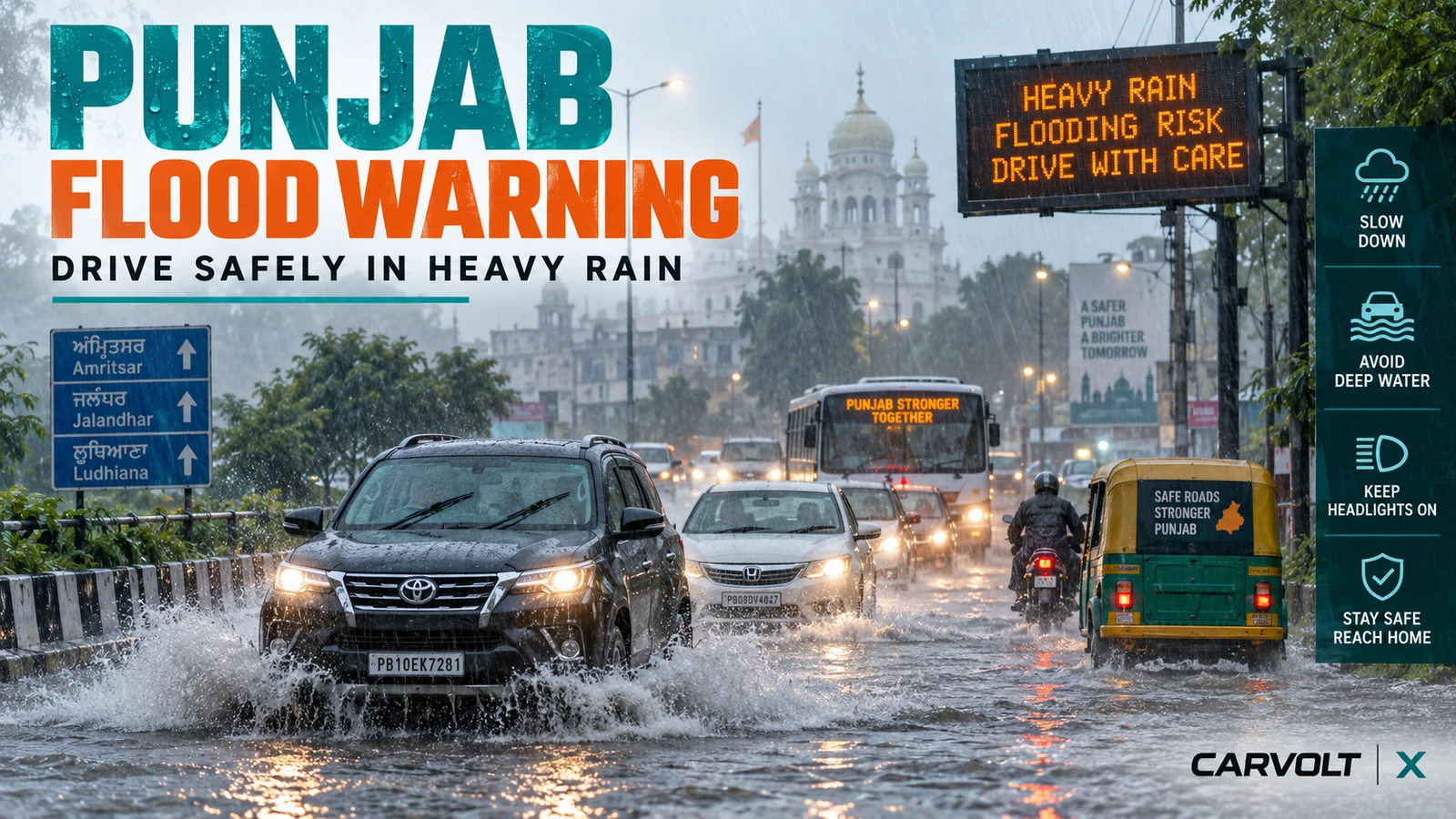
Weather and disaster-management authorities issued severe-rain alerts for parts of Punjab in August 2026, warning that intense downpours could create urban flooding and dangerous road conditions in six major cities. Because this is a time-sensitive safety topic, readers must check the current PMD and PDMA alerts rather than treating the August forecast as active today.

Why cities flood quickly
Short periods of very heavy rain can overwhelm drains, especially where debris blocks inlets or construction changes natural flow. Underpasses, low-lying intersections and roads beside waterways can become hazardous before the rain appears extreme in another neighbourhood.
Drivers often underestimate moving water and cannot see the damaged surface below it. Modern cars are not waterproof. Water can affect engines, electronics, wheel bearings, brakes and high-voltage EV components.
If you are already on the road
Move away from low points and follow police diversions. Do not stop beneath trees, unstable billboards or electrical infrastructure. If visibility becomes too poor, leave the carriageway at a safe established location instead of stopping in a live lane.
Driving in intense rain
Slow down before water collects. Wet roads lengthen braking distance and can hide potholes or missing covers. Use headlights for visibility, leave a larger gap and avoid abrupt steering. Hazard lights should not be used as a substitute for normal lighting while moving unless local rules or an immediate emergency require them.
Never enter floodwater when depth, road edge or current is unclear. A small vehicle can lose traction, while water entering the intake or electrical system can cause severe damage. Turn around and use higher ground. If authorities close a road, do not bypass the barrier.
Prepare before travelling
Check wipers, tyres, brakes, lights and demisters. Charge the phone, carry water and keep essential medicines accessible. Save emergency numbers and tell someone the intended route. EV drivers should avoid charging equipment exposed to standing water and follow manufacturer safety advice after any submersion.
Weather warnings expire and conditions can differ street by street. Check PMD, PDMA and local administration updates immediately before departure. The safest journey may be the one postponed until drainage improves.
After driving through shallow unavoidable water, test brakes gently at low speed. Do not restart a stalled engine in water, because doing so may increase damage. Arrange recovery from a safe location.
A practical way to use this update
Start by separating the dated announcement from the situation that exists when you read it. News can remain useful after a price, deadline, weather warning or model status changes, but only if the original date is visible. Open the responsible authority or manufacturer's latest page before making a payment, changing a route or repeating a figure.
Next, identify the decision the information actually supports. A national statistic offers market context but does not approve an individual loan. A vehicle reveal explains design direction but does not confirm local sales. A project update can guide route planning without guaranteeing an opening hour. A warning should encourage preparation without being presented as permanently active.
For money decisions, write down the complete cost. Vehicle buyers should include registration, tax, insurance, financing, energy, maintenance and likely resale. Commuters should consider time, tolls and diversions. Fuel users should work from litres consumed rather than reacting to the cost of one full tank. Small assumptions become large differences over a year.
For safety decisions, prefer the cautious option when official information is incomplete. Do not enter a closed road, floodwater or construction zone because an older report described progress. Do not use an unfamiliar payment or emergency link because its message looks official. Confirm the domain independently and protect personal and banking information.
Finally, retain useful evidence. Save the official notification, written quotation, payment receipt, booking form or route advisory that applied to your decision. If information later changes, that record helps explain what was promised and when. It also makes a complaint or correction easier.
This method prevents a common problem in fast-moving automotive coverage: treating a true statement from one date or market as universally current. The update becomes more valuable when readers combine it with a fresh official check, their own usage pattern and a realistic margin for change.
Final takeaway
Before acting, confirm the latest official information, calculate the effect using your real travel pattern and keep documentary proof of any payment or booking. A current source and a realistic budget are more useful than an isolated headline.


