

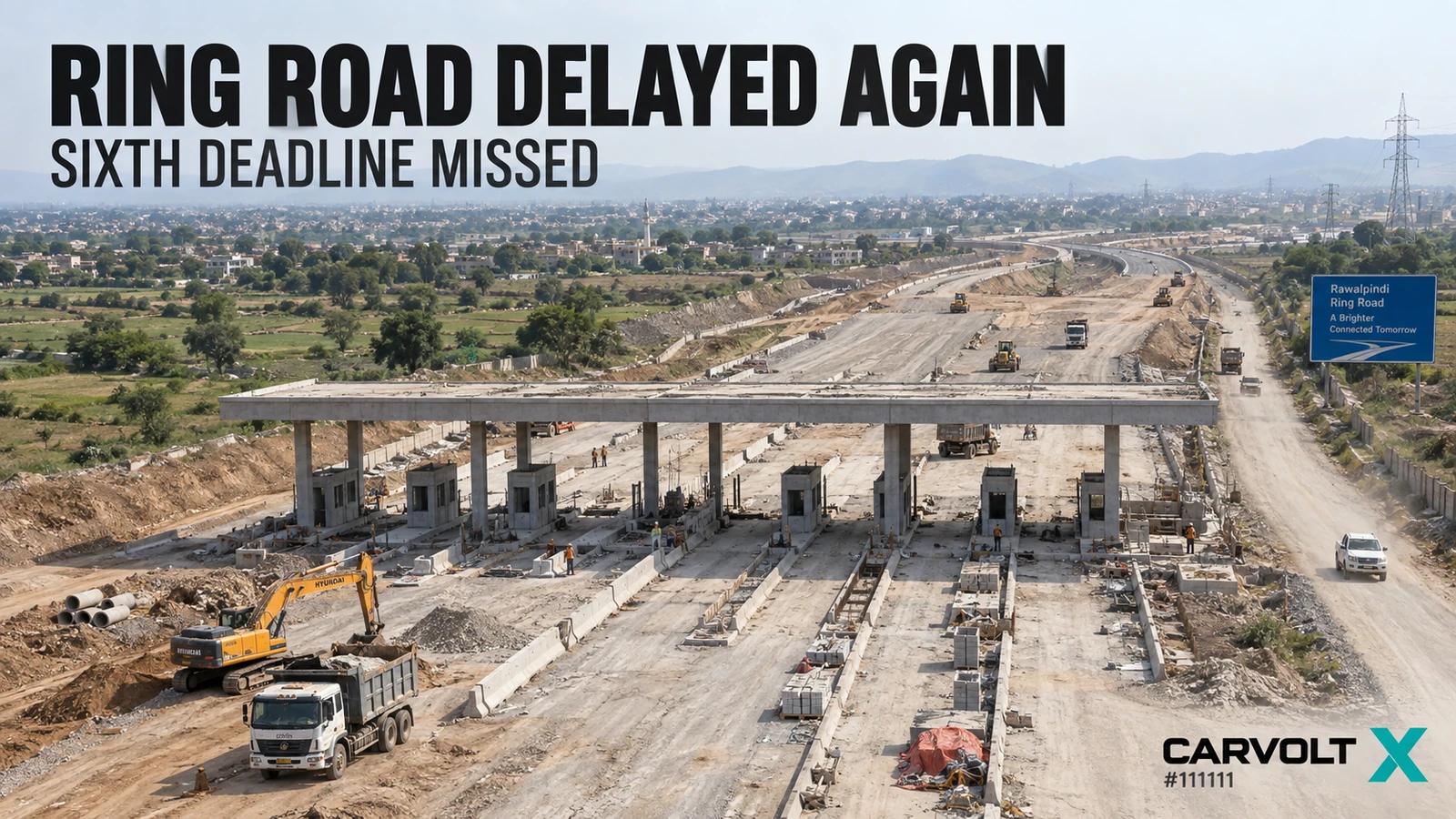
The Rawalpindi Ring Road missed its sixth reported completion target after the planned August 14 opening passed without the route becoming fully operational. Source material dated August 18, 2026 indicated that tolling infrastructure and other finishing items remained outstanding.
The current opening status must be checked with the Rawalpindi Development Authority, project authorities or Punjab government before publication. Construction schedules change, and an old “opening soon” report can become misleading within days.

What the road is expected to change
The project is intended to redirect through-traffic and heavy vehicles away from congested urban roads, improve regional connections and support development around its interchanges. The size of those benefits depends on how seamlessly the completed route connects with existing highways.
Delays do not erase the project's value, but repeated missed targets raise questions about coordination, utilities, land, contractor performance and commissioning. A clear explanation of remaining work would help the public distinguish a nearly complete road from one still facing major obstacles.
Why another delay matters
Road projects affect people before they open. Construction diversions add time, dust and fuel use, while businesses around the corridor deal with uncertain access. Repeated deadlines also make it difficult for commuters and freight operators to plan routes with confidence.
Completion should mean more than continuous asphalt. Safe opening requires lane markings, lighting, drainage, barriers, signs, interchanges and operational toll or control systems where applicable. Rushing traffic onto an incomplete facility can replace congestion with a safety problem.
Advice for motorists
Use current traffic-police or development-authority updates rather than relying on an old opening date. Allow extra time, follow temporary signs and avoid entering closed construction areas. At night, reduce speed because barriers and lane shifts can appear suddenly.
Once the route opens, drivers should expect a learning period. Confirm entry and exit points before travelling and never stop in a live lane to check navigation. Heavy vehicles must follow posted restrictions, axle rules and toll requirements.
What to watch
The meaningful next update is a documented opening status and a list of remaining works. Authorities should communicate what is open, which links are incomplete and whether restrictions apply. Until that confirmation arrives, commuters should treat target dates as estimates rather than promises.
A practical way to use this update
Start by separating the dated announcement from the situation that exists when you read it. News can remain useful after a price, deadline, weather warning or model status changes, but only if the original date is visible. Open the responsible authority or manufacturer's latest page before making a payment, changing a route or repeating a figure.
Next, identify the decision the information actually supports. A national statistic offers market context but does not approve an individual loan. A vehicle reveal explains design direction but does not confirm local sales. A project update can guide route planning without guaranteeing an opening hour. A warning should encourage preparation without being presented as permanently active.
For money decisions, write down the complete cost. Vehicle buyers should include registration, tax, insurance, financing, energy, maintenance and likely resale. Commuters should consider time, tolls and diversions. Fuel users should work from litres consumed rather than reacting to the cost of one full tank. Small assumptions become large differences over a year.
For safety decisions, prefer the cautious option when official information is incomplete. Do not enter a closed road, floodwater or construction zone because an older report described progress. Do not use an unfamiliar payment or emergency link because its message looks official. Confirm the domain independently and protect personal and banking information.
Finally, retain useful evidence. Save the official notification, written quotation, payment receipt, booking form or route advisory that applied to your decision. If information later changes, that record helps explain what was promised and when. It also makes a complaint or correction easier.
This method prevents a common problem in fast-moving automotive coverage: treating a true statement from one date or market as universally current. The update becomes more valuable when readers combine it with a fresh official check, their own usage pattern and a realistic margin for change.
Final takeaway
Before acting, confirm the latest official information, calculate the effect using your real travel pattern and keep documentary proof of any payment or booking. A current source and a realistic budget are more useful than an isolated headline.


