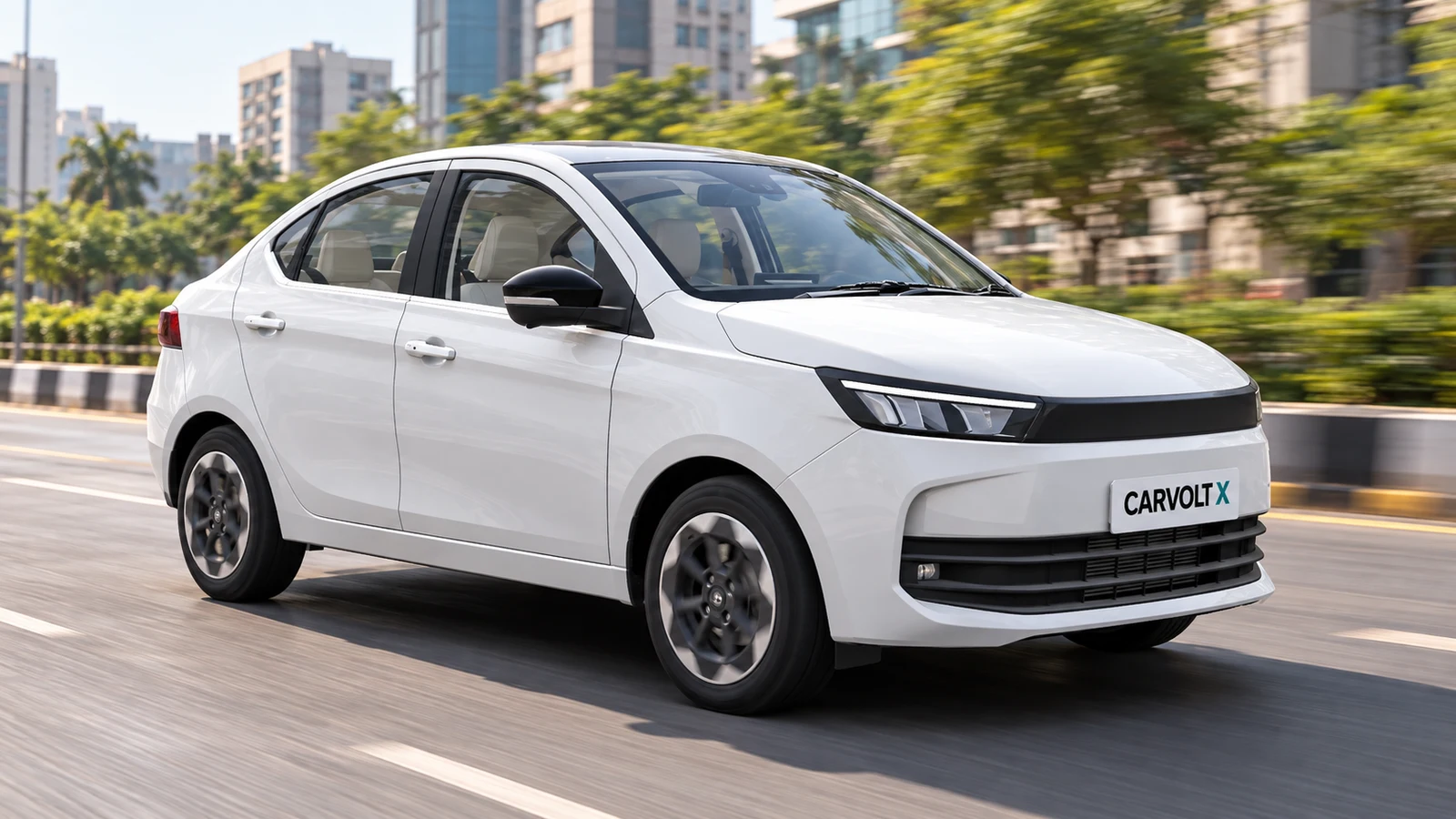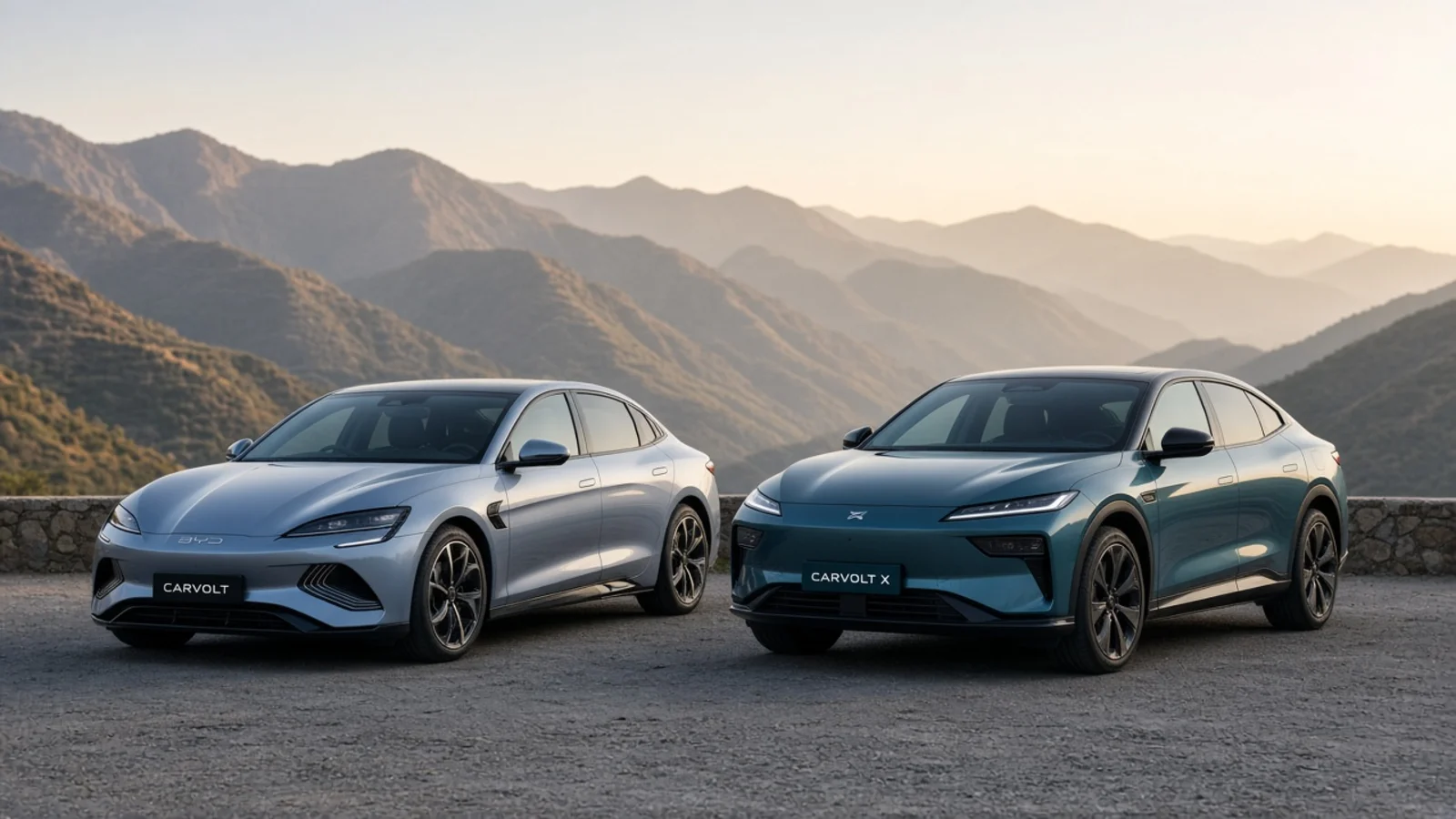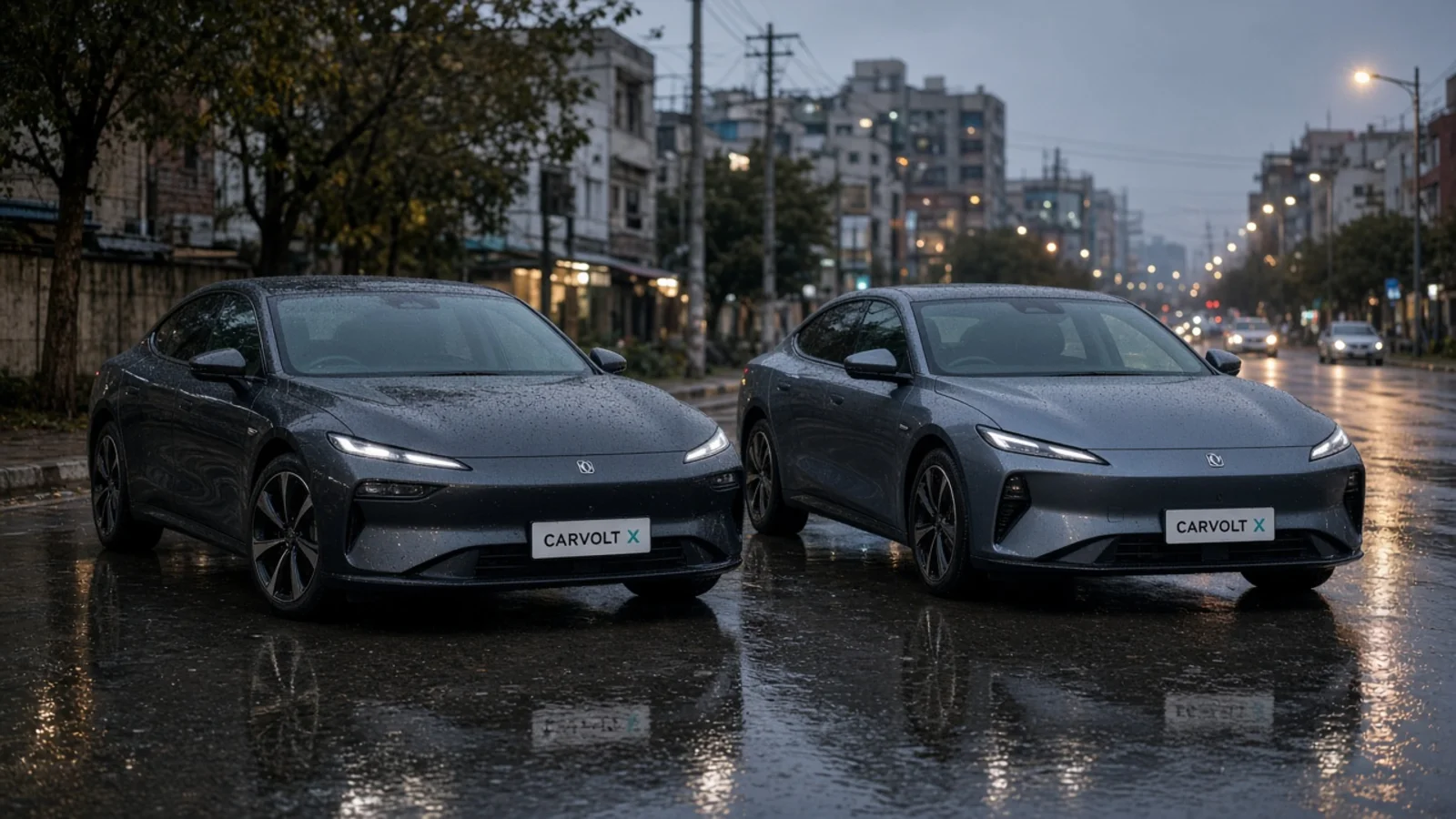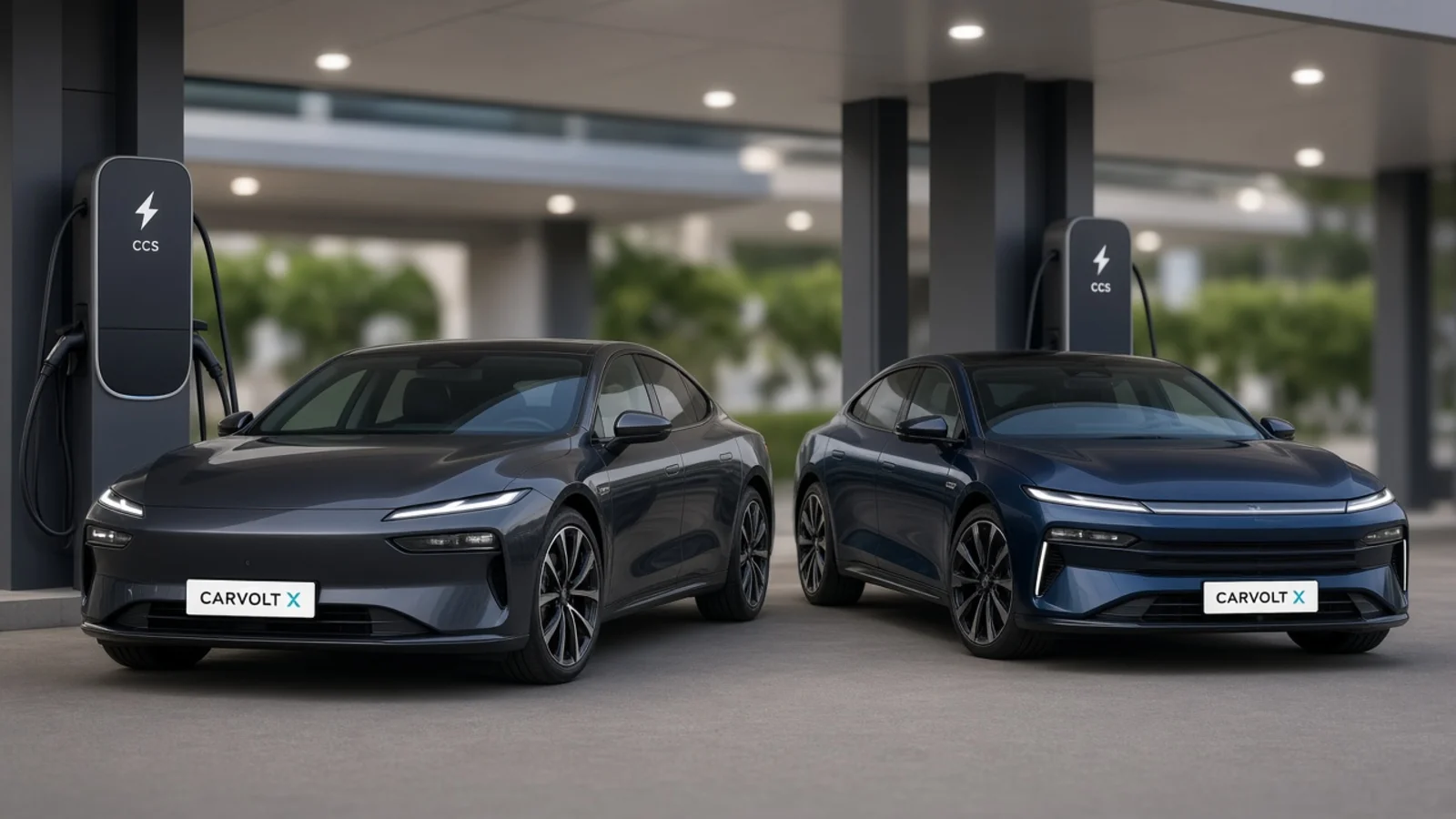


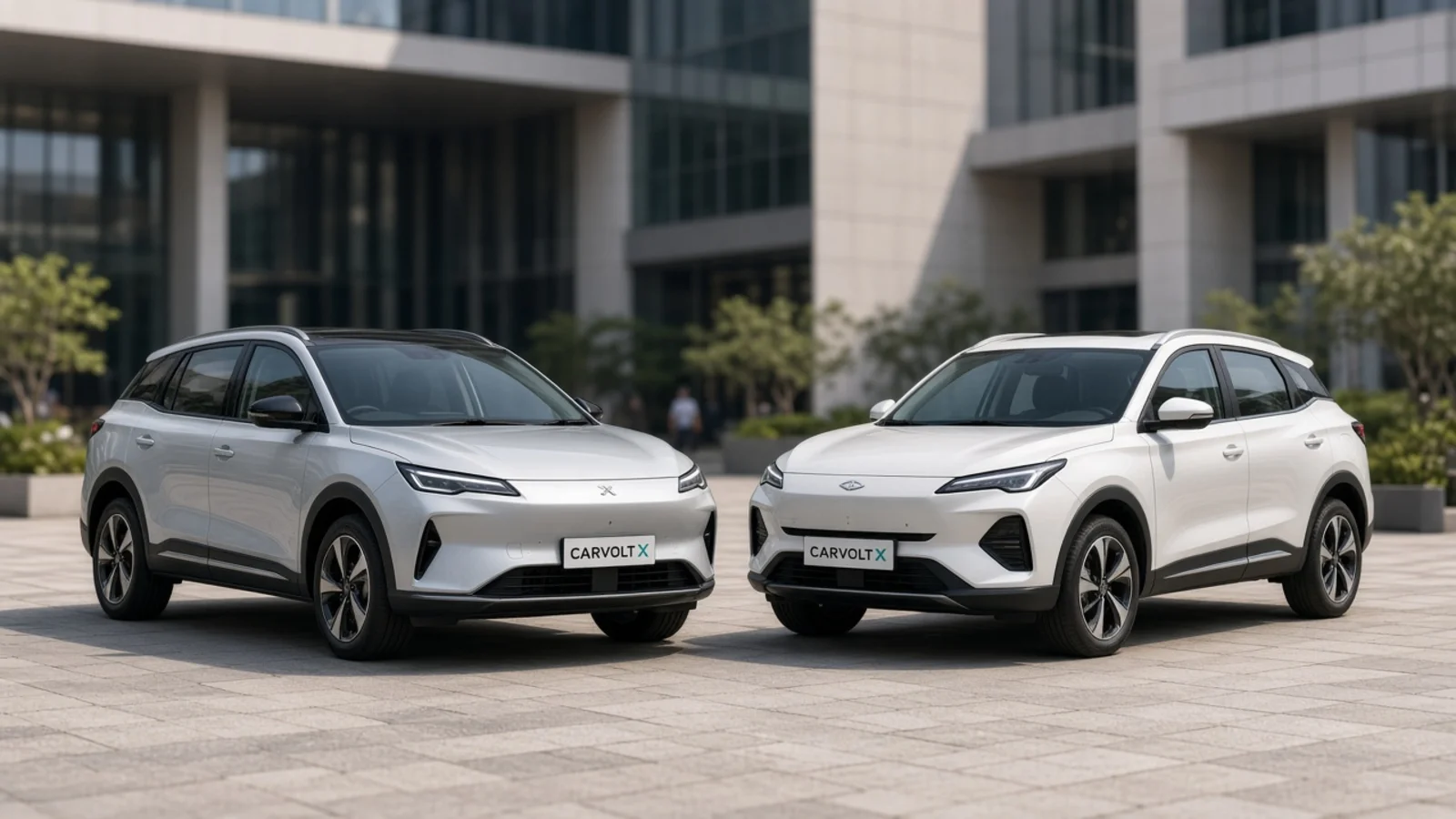
Two compact electric SUVs sit close on Pakistan stickers. The Aion UT Elite lists at PKR 6,399,000 ex-factory. The Kaiyi X3 Pro EV Flagship sits at PKR 6,790,000. Gap: PKR 391,000, or 5.9%.
Nearly identical motor power and catalogue range, with a clear split on battery size, ADAS depth and packaging. Open the interactive comparison for the full matrix.
Aion UT vs Kaiyi X3 Pro: quick verdict
| Buyer priority | Our pick | Why |
|---|---|---|
| Lower price and denser ADAS on the sheet | Aion UT Elite | PKR 6,399,000, AEB/BSD/LDWS/LKAS, SVM, longer battery-km warranty |
| Larger battery and faster DC claim | Kaiyi X3 Pro EV Flagship | 53.6 kWh vs 44.12 kWh, DC 10-80% about 30 min vs 40 min |
| Higher ground clearance | Kaiyi X3 Pro EV Flagship | 183 mm vs 147 mm |
Price and positioning
The UT Elite undercuts the X3 Pro EV Flagship by PKR 391,000. Both are automatic EV SUVs seating five. Use the on-road cost calculator for your city before comparing finance quotes.
Battery, range and charging
The Aion UT Elite lists an LFP pack at 44.12 kWh, catalogue range 400 km (NEDC Combined noted on one row), home charge about 8 hours, and DC 10-80% about 40 minutes. Battery warranty is listed at 8 years / 200,000 km. Charge port is CCS2. AC onboard charger is blank on this sheet.
The Kaiyi X3 Pro EV Flagship lists Lithium Iron Phosphate at 53.6 kWh, range 401 km, home charge about 8 hours, and DC 10-80% about 30 minutes. Battery warranty is listed at 8 years / 150,000 km. Charge port is CCS2 with a 7 kW AC onboard charger published.
Range figures are essentially tied on paper despite the pack-size gap, so confirm the test cycle and real trip data before treating either claim as equal. Check dwell times with the EV charging time tool.
Performance and dimensions
Motor power is nearly tied: 134 HP for the UT Elite and 133 HP for the X3 Pro EV Flagship. Both list a 160 KM/H max speed and regenerative braking.
The Kaiyi is longer (4,443 mm vs 4,270 mm) and taller (1,646 mm vs 1,575 mm), with higher ground clearance (183 mm vs 147 mm) and larger wheels (18 in vs 16 in). The UT answers with a longer wheelbase (2,750 mm vs 2,632 mm) and is slightly wider. Kerb weights are 1,680 KG (UT) and 1,620 KG (Kaiyi).
Boot-space note: the dimension table lists 440 L for the UT and 1,320 L for the Kaiyi. A separate UT specifications row also cites standard 321 L extending to 689 L. Those conflicting or seats-folded-style figures need brochure confirmation before you plan luggage around them.
Features and equipment
Both list ABS, traction and stability control, 360 camera, dual powered seats, wireless charger, Android Auto and Apple CarPlay. The UT Elite lists a denser ADAS set on the current sheet: AEB, blind-spot detection, lane departure warning, lane keep assist, RCTA/RCTB, parking distance warning, and surround view monitor, plus dual-zone climate, panoramic sunroof, power boot, roof rack, and a larger display (14.6 in vs 10.25 in). The Kaiyi lists downhill assist, speed limiter, towing capacity (760 KG), and a published 7 kW AC charger where the UT sheet is blank.
Several Kaiyi overview cells remain blank on the live matrix even where values appear in dedicated rows. Prefer the motor, battery and dimension sections.
Spec comparison
| Specification | Aion UT Elite | Kaiyi X3 Pro EV Flagship |
|---|---|---|
| Ex-factory price | PKR 6,399,000 ✓ | PKR 6,790,000 |
| Battery capacity | 44.12 kWh LFP | 53.6 kWh LFP ✓ |
| Catalogue range | 400 km | 401 km |
| Motor power | 134 HP ✓ | 133 HP |
| DC 10-80% | about 40 min | about 30 min ✓ |
| Home charge (0-100%) | about 8 hours | about 8 hours |
| Ground clearance | 147 mm | 183 mm ✓ |
| Wheelbase | 2,750 mm ✓ | 2,632 mm |
| Battery warranty | 8 yrs / 200,000 km ✓ | 8 yrs / 150,000 km |
| Display size | 14.6 in ✓ | 10.25 in |
Which one should you buy?
Choose the Aion UT Elite if you want the lower sticker, denser published ADAS, longer battery-km warranty, and a longer wheelbase in a lower, more compact EV SUV package.
Choose the Kaiyi X3 Pro EV Flagship if you want the larger battery, quicker DC claim, higher ground clearance, and the published AC charger figure, after resolving boot-volume rows in writing.
Bottom line
Almost the same catalogue range for different pack sizes, 5.9% apart on price. ADAS and packaging favour the UT on this sheet. Energy hardware favours the Kaiyi. Compare them live on the Aion UT vs Kaiyi X3 Pro comparison page.