
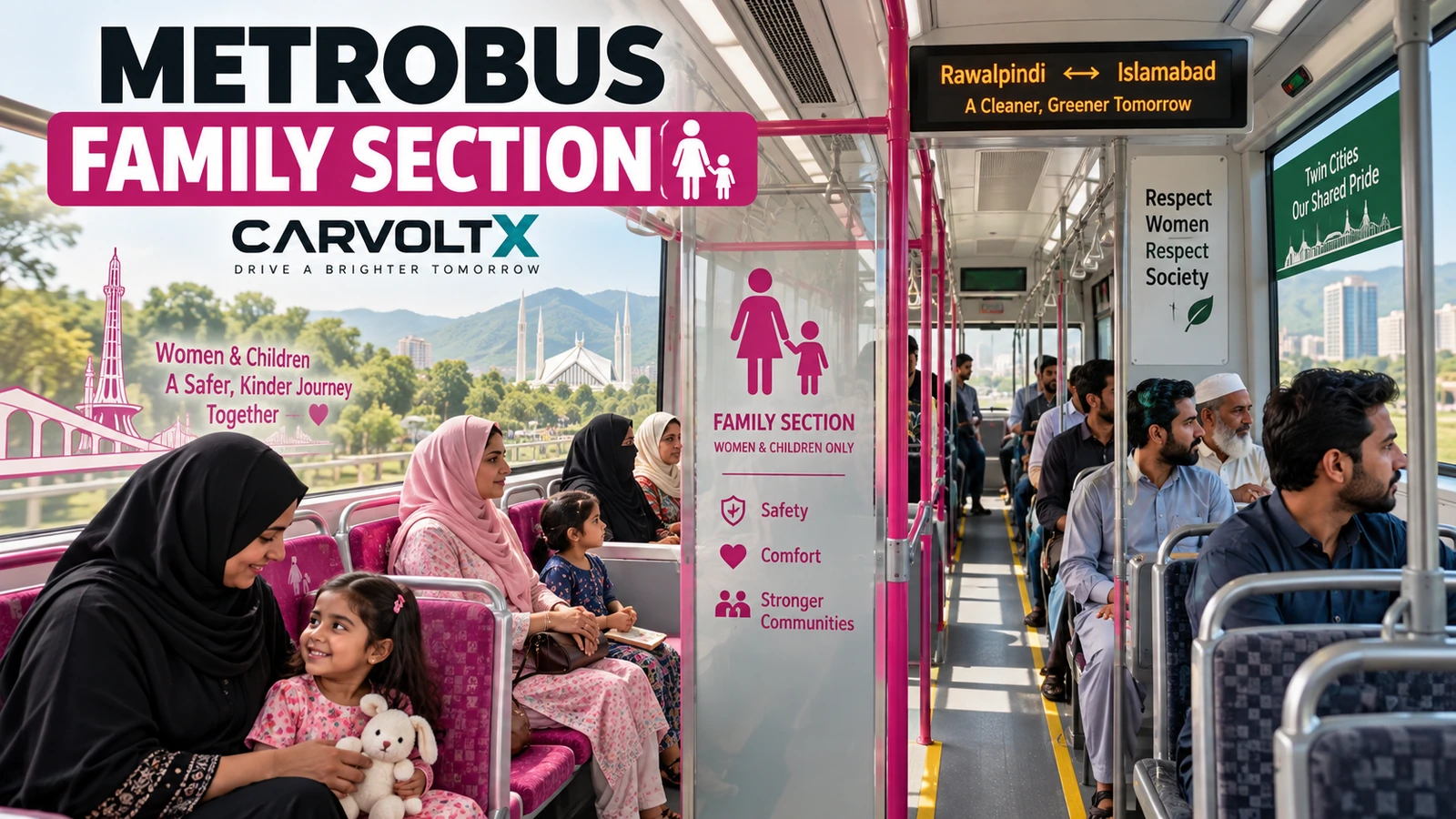
The Punjab Mass Transit Authority introduced a dedicated Metrobus section for women travelling with children on the Rawalpindi-Islamabad system. The change addresses a practical challenge: boarding, standing and managing young children can become difficult when buses are crowded.
A dedicated section can improve comfort, but success depends on clear signs, consistent enforcement and enough overall capacity. Staff should explain who may use the space, respond respectfully to disputes and ensure that the arrangement does not obstruct wheelchair access or emergency movement.
Passengers should allow people to exit before boarding, keep aisles clear and offer priority seating where appropriate. Parents remain responsible for supervising children and should avoid placing strollers or bags where they create a trip hazard.
PMA should monitor crowding, complaints and travel patterns, then adjust the allocation if necessary. The measure should be judged by whether it makes journeys safer and more predictable without creating confusion elsewhere in the bus.

How to interpret this update
The publication date and market are essential. An enforcement drive, diversion, discount, service threat or fuel notification can expire quickly. A global vehicle debut does not establish Pakistan availability, and an overseas specification cannot be assigned to a local variant without confirmation. Readers should check the latest primary notice before travelling, paying or booking.
Approval, announcement, implementation and completion are separate stages. The same applies to vehicle marketing: reveal, booking, production and delivery do not mean the same thing. When an important detail has not been confirmed by the responsible authority, it should remain TBA rather than being estimated.
Practical steps for readers
Keep vehicle documents current and use official payment or verification channels. For a purchase, ask for a written quotation showing the exact grade, effective date, taxes, registration, freight, warranty and cancellation terms. For repairs, request a line-item estimate with part numbers, labour, paint, calibration and applicable taxes instead of reacting to one total.
For public transport or road restrictions, check the relevant authority shortly before leaving and allow additional time. Follow police directions on the ground, keep emergency routes clear and avoid spreading screenshots that lack a date or official source. A calm response usually prevents a temporary disruption from becoming worse.
What to verify next
Look for a dated circular, notification, product page, price list, recall record or official social advisory. Confirm the city, market, model year and variant. If two sources disagree, contact the responsible organization rather than selecting the figure that appears more attractive.
CarvoltX tools can help organize comparisons, range, charging, on-road cost and maintenance questions. They are planning aids, not replacements for an authorized distributor, workshop, police department, transport authority or government price notification.
Why this matters
Automotive information affects safety, mobility and household budgets. An outdated diversion can waste a journey, an expired discount can distort financing, and the wrong model specification can produce a poor purchase. Clear uncertainty is more trustworthy than false precision.
Readers should save dated confirmations for important payments and decisions. Recheck the status immediately before acting because later negotiations or notices may supersede the position described here. Repetition across several reports is not independent verification when all trace back to the same unsupported claim.
Bottom line
Use the headline as a starting point and the official record as the decision point. Confirm the correct date, place, model and scope, then evaluate the effect on your own route or ownership plan. This disciplined approach keeps expectations realistic as the story develops.
A simple decision framework
Write down the claim, its date and the action it appears to require. Next, identify what would prove it: a current price sheet, vehicle identification number, service bulletin, transport notice or government notification. Then decide whether the information is complete enough to act. If not, contact the named authority and keep the response.
For costs, compare totals rather than isolated numbers. Include taxes, registration, financing, energy, scheduled maintenance and likely consumables. For travel, include time, parking and a safe alternative route. For a repair, distinguish required safety work from cosmetic choices and confirm whether calibration is included.
Finally, revisit the decision when a new official update appears. News develops, and a changed position should be recorded with its own date instead of silently replacing the original context.