


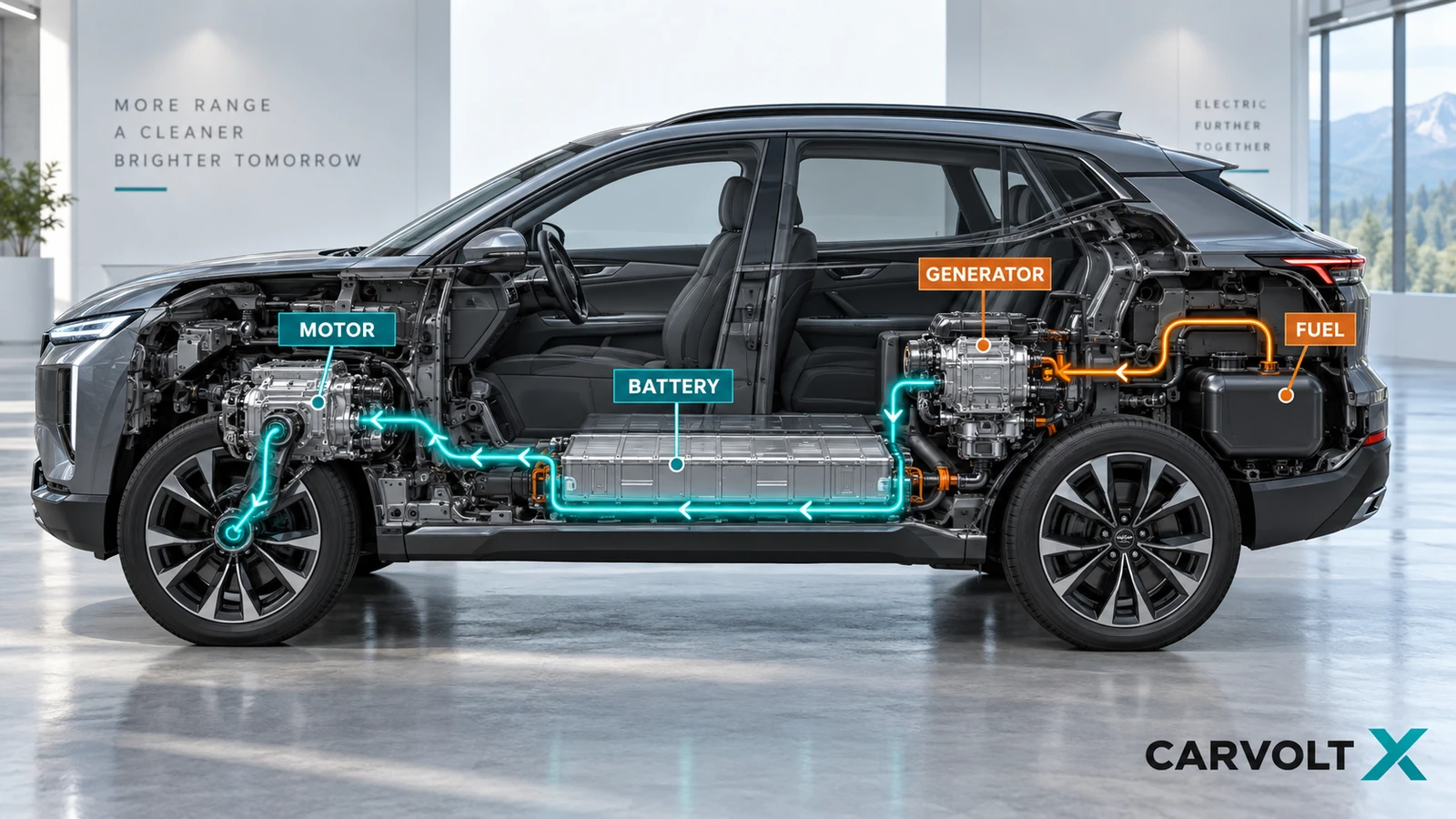
Range-extender electric vehicles are becoming one of the most interesting bridges between petrol cars and fully electric vehicles. A REEV normally drives its wheels with electric motors, while a petrol engine works mainly as an onboard generator when the battery needs support. That layout can deliver the smooth response of an EV without making every long journey dependent on public charging.
The category is especially relevant in markets where charging networks are expanding but remain uneven. It is also easy to misunderstand. A claimed combined range is not the same thing as electric-only range, and laboratory figures from China, Europe or another market cannot be compared without checking the test cycle. This list therefore focuses on seven notable global REEV nameplates and the different roles they play, rather than declaring one universal winner.
1. Li Auto L9
The Li Auto L9 helped make the large luxury REEV SUV a mainstream idea in China. Its appeal is not simply the powertrain. It combines three-row family accommodation, a technology-heavy cabin and electric-motor driving with a petrol generator for longer routes. It suits buyers who want an EV-like daily experience but regularly cover distances beyond dependable charging coverage.
2. AITO M9 EREV
The range-extender version of the AITO M9 targets the same premium family space with a strong emphasis on cabin technology and driver assistance. It is a useful example of how REEVs are moving beyond economy-focused transport. Buyers should still verify software support, connected services and warranty coverage in the country where the vehicle will actually be used.
3. Deepal S07 REEV
Deepal packages the REEV formula in a more accessible midsize crossover. The S07 is important because it shows that range-extender technology does not have to be limited to very large, very expensive SUVs. Its real value depends on local specification, battery size, charging standard and after-sales support, all of which can vary by market.
4. Leapmotor C10 REEV
The Leapmotor C10 is offered in battery-electric and range-extended forms in selected markets. That gives shoppers a useful same-model choice between pure-electric simplicity and extra long-distance flexibility. For a fair comparison, calculate how much of your annual driving could be completed on battery power rather than focusing only on the headline combined range.
5. Changan Nevo Hunter
The Nevo Hunter applies range-extender technology to a pickup. Electric motors can provide useful low-speed response, while the generator reduces anxiety on remote routes. Pickup buyers must look beyond acceleration and claimed range, however. Payload, towing limits, bed dimensions, tyre availability and service coverage matter just as much.
6. Mazda EZ-60 Range-Extender
The China-market Mazda EZ-60 has been presented with electric and range-extender powertrain choices. Its inclusion reflects another trend: established international badges are using Chinese-market platforms and electrified systems to explore new segments. Availability, branding and specification outside China should never be assumed from a domestic-market announcement.
7. Yangwang U8
BYD's Yangwang U8 uses a range-extender layout in a very different way. It is a heavy, high-performance luxury off-roader built around multiple electric motors and advanced chassis functions. It demonstrates the engineering breadth of the concept, but its complexity, price and specialist maintenance needs make it a technology showcase rather than a sensible choice for every driver.
How should buyers compare REEVs?
Start with electric-only range on the correct test cycle, usable battery capacity and AC/DC charging capability. Then check fuel-tank size, generator behaviour at motorway speeds, efficiency after the battery is depleted and whether the vehicle can preserve charge for later urban driving. A REEV that is rarely plugged in may consume more fuel than expected because it carries both a battery system and an engine.
Pakistan-based shoppers also need to verify homologation, charging-port compatibility, parts supply, diagnostic access and warranty validity. A privately imported model may look attractive on paper while lacking official software, connected functions or trained technicians. Use the CarvoltX EV range and charging-time tools to model your routine, then compare the finalists side by side.
The best REEV is therefore the one that spends most daily journeys on electricity while keeping the generator as a genuine backup. The technology is compelling, but only when charging habits, service support and real travel patterns match the vehicle.
REEV questions buyers often ask
Can a REEV be used without charging? Usually it can continue with generator support, but doing so misses much of the reason for carrying a large battery. Is it the same as a normal hybrid? Not quite. The electric motors are central to propulsion, while the engine mainly extends range by generating electricity. Is a larger combined-range claim automatically better? No. Test cycle, battery-depleted efficiency, charging speed, weight and service support can matter more. Buyers should compare like-for-like figures and insist on documents for the exact market variant.


