

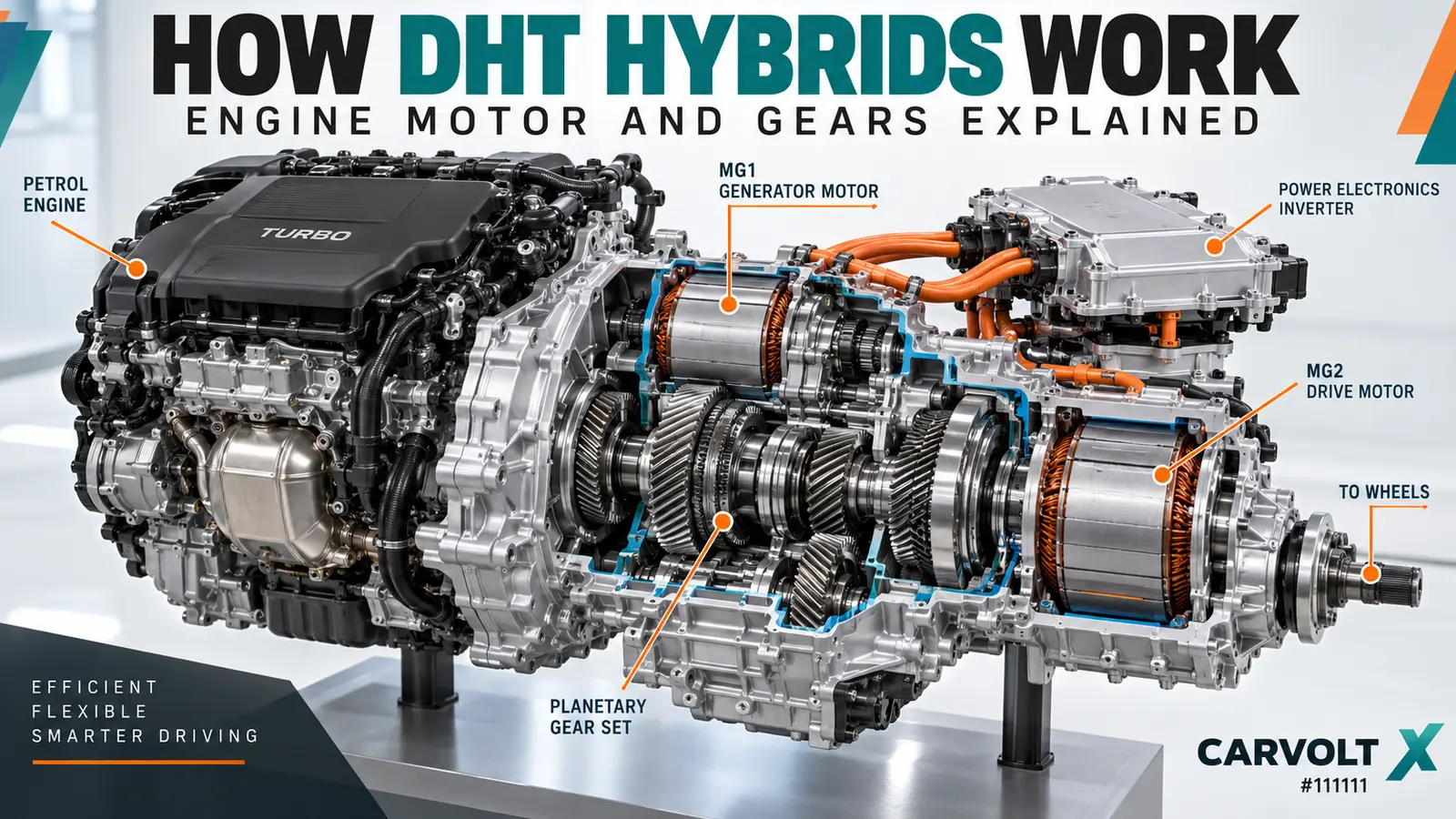
A dedicated hybrid transmission coordinates an engine, electric motor and reduction gears specifically for hybrid operation. Understanding its modes helps buyers read modern hybrid specifications.
What we can state today
Unlike a conventional automatic adapted to accept a motor, a DHT is designed around electric assistance from the beginning. Depending on design and speed, it can drive electrically, combine engine and motor output, or let the engine operate efficiently.
The confirmed status matters more than the excitement around a launch, proposal or comparison. Readers should be able to see which details come from an official announcement, which are manufacturer claims and which remain TBA.
What it changes
Do not assume every DHT works identically. Verify motor count, gear arrangement, battery, system output, drive wheels and whether published efficiency uses the same test cycle.
A useful CarvoltX article goes beyond the largest number in the headline. It connects the development to cost, reliability, safety, daily convenience and the support available after purchase or implementation.
Variant details to recheck
Use current primary information. For a vehicle, check the precise variant, model year, powertrain, battery, claimed test cycle, drive system, safety equipment, warranty, price, booking and delivery. For infrastructure or enforcement, confirm the authority, approval stage, dates, affected roads and operational outcome.
Never assume an international model matches Pakistan specification. Wheels, airbags, software, charging connectors, climate equipment and warranty terms can vary. A display vehicle, test unit or media preview does not prove customer sales.
Living with the numbers
Calculate the complete cost rather than only the sticker price. Registration, insurance, financing, fuel or electricity, charger installation, tyres, service and parts can change the result. Commercial and off-road buyers should also calculate payload, downtime and recovery support.
Test the conditions that matter. Check visibility, braking, turning circle, seating, luggage, ride and parking. EV and PHEV owners should confirm safe grounded charging and plan a range reserve. Motorcycle riders need a certified helmet and should include protective equipment in the budget.
Dealer and service realities
Ask for written warranty terms, service intervals and parts arrangements. Confirm trained technicians, diagnostic equipment and the process for approving a claim. Electrified vehicles need separate clarity for the battery, motor, inverter and charger.
A verbal promise should not replace a dated quotation or official notice. Keep copies of the specification sheet, booking form, receipts and correspondence. These records matter if price, delivery or equipment changes later.
Quick takeaway
This 2026 topic is useful because it affects vehicle choice, operating cost, mobility or road safety. The right response is to verify the exact status, compare the complete impact and avoid making a payment or travel decision from a headline alone.
Checks worth doing today
Before you treat this as final, recheck the latest official notice or authorised dealer sheet for dates, prices and eligibility. Treat TBA figures as TBA, and prefer a dated public document over social forwards.
| 1 | Confirm the effective date on an official page or circular. |
|---|---|
| 2 | Match the exact variant, city or scheme named in the claim. |
| 3 | Ask for written quotations when money or bookings are involved. |
| 4 | Update your decision if a later notice replaces an earlier report. |


